WEST PALM BEACH, Fla. (AP) — A business jet that crashed in South Florida with nine people aboard, including a family with two young children, likely started breaking apart before it slammed into the ground and erupted in a fireball, a federal investigator said Monday.
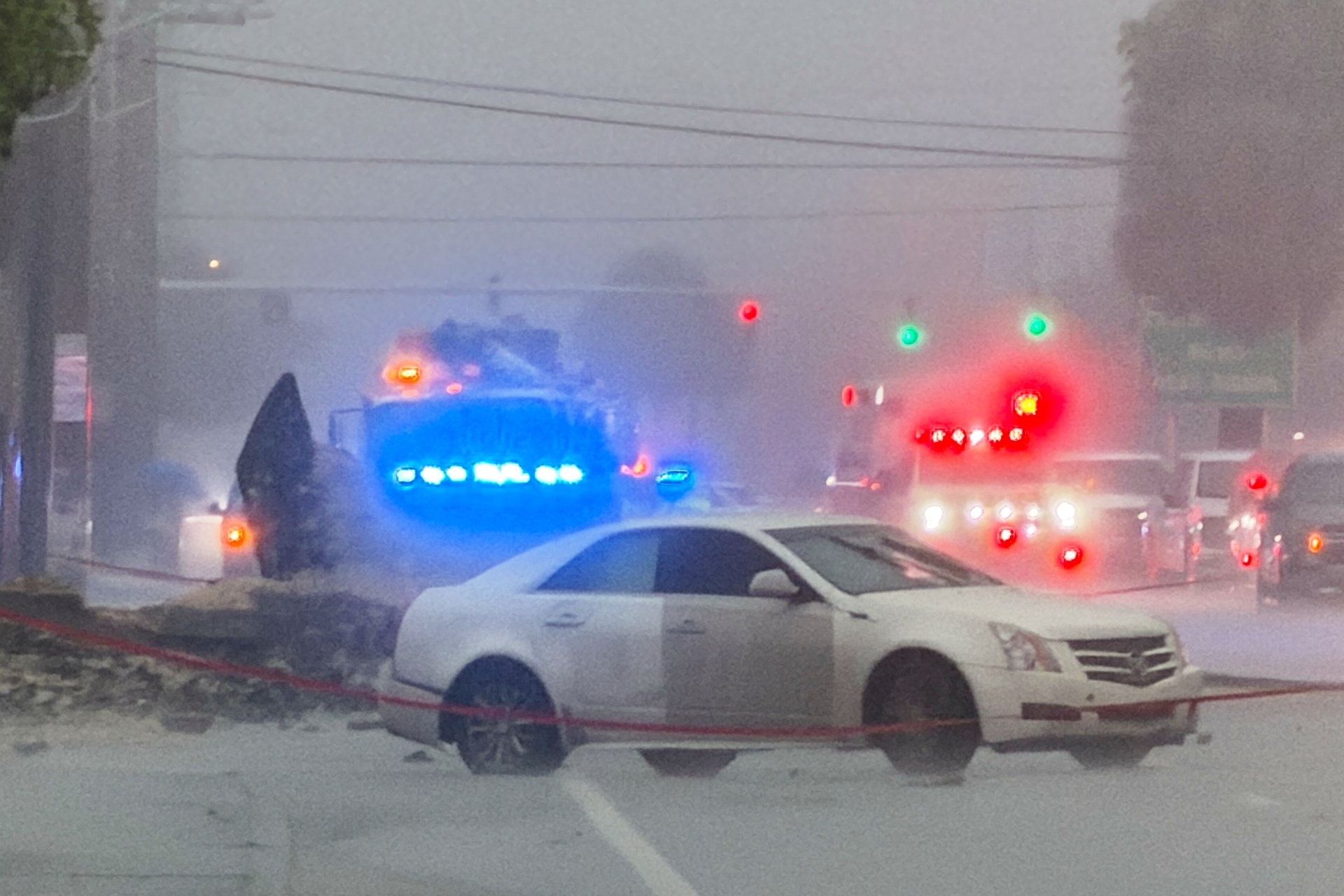
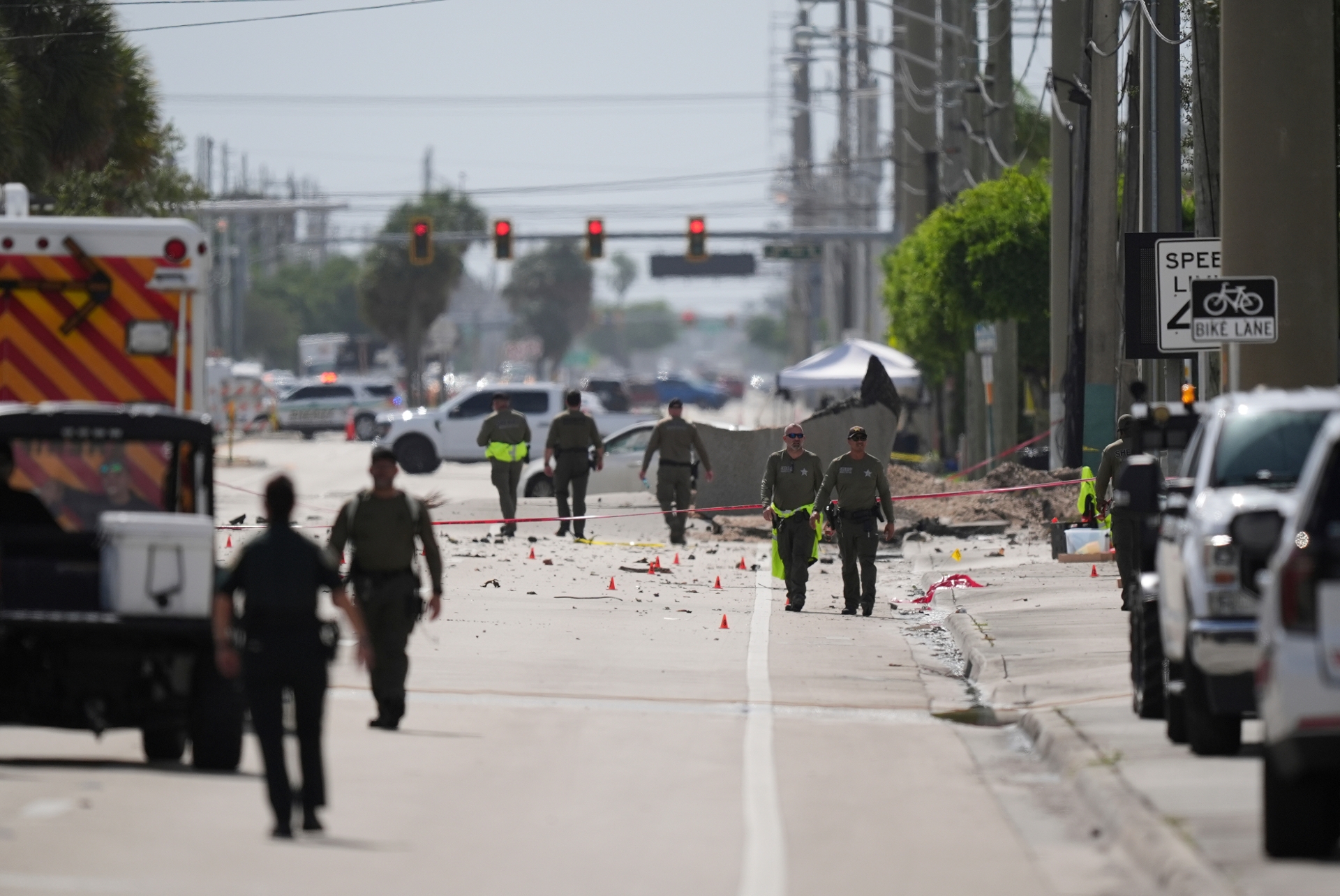
Video recorded by passersby captured the Bahamas-bound Learjet's rapid nosedive Sunday afternoon before it exploded in Greenacres, about 7 miles (11 kilometers) southwest of West Palm Beach. Flames flickered around chunks of pavement lining the crater as shocked residents looked on in horror. Thick black smoke engulfed the crash site and little remained of the plane.
Get The Latest News!
Don't miss our top stories and need-to-know news everyday in your inbox.
The victims included 20-year-old co-pilot Nathalia Gadelha Filgueiras, as well as technology entrepreneur Adam Robinson, his wife, Helen Sharp, and their two young children, relatives said.
National Transportation Safety Board member Tom Chapman said during a news conference Monday that investigators found evidence the aircraft started breaking up before it hit the ground and that debris from the aircraft could be spread far and wide.
Jeff Guzzetti, a former investigator for the NTSB and the Federal Aviation Administration, said key components of the jet's tail may have been lost during the turbulence or as it nose-dived, making the plane impossible to control.
“That very well could explain the missile-like profile just before it hit the ground," he said.
Weather conditions will be a major focus of the investigation, Chapman said. Rain pounded the region on Sunday, and one of the pilots told air traffic control about icing conditions at a high altitude.
At the time of the crash, there was an FAA warning out to pilots in the area about nearly-stationary thunderstorms with cloud tops reaching all the way up to 45,000 feet, according to AccuWeather. Pilots are trained to avoid thunderstorms, if possible, for safety.
Chapman said investigators still have to determine what the weather conditions were at 35,000 feet (11,000 meters), the altitude the plane was flying at when the pilot started reporting problems.
Retired airline pilot John Cox, who is now CEO of the Safety Operating Systems consulting business, said the conditions the pilot described on the radio, with turbulence as well as liquid precipitation freezing on the plane at negative 47 degrees Celsius, would have terrified him.
Typically, precipitation at that altitude and temperature comes in the form of ice crystals that simply go around the plane, he said.
“Those are all really big red flags to me," he said.
Chapman said the plane was originally equipped with a cockpit voice recorder that investigators hope to recover.
“We have a lot of work to do on scene,” NTSB investigator Timothy Monville said at the news conference. “This will be a several-day process, and the biggest obstacle that we’re going to have is recovering the major wreckage from the impacted crater on the roadway.”
The jet began its journey at the Austin-Bergstrom International Airport in Texas with two crew and seven passengers, Chapman said.
Camila Corteleti told the New York Post and New York Times that her daughter, 20-year-old Nathalia Gadelha Filgueiras, was one of the pilots. She earned her pilot’s license in 2023 while a 17-year-old senior at West Boca Raton Community High School in Florida, local news reports said at the time.
Her pilot’s license showed she had the rating to fly that model of Learjet but not to be in command of the flight.
Her father, Allan Filgueiras, told The Associated Press he wasn’t prepared to speak about the crash.
The identity of the other pilot was not immediately disclosed.
A man who was driving close to the scene as the plane crashed suffered leg wounds, Monville said, but he didn't know the extent of the injury.
The plane was heading east when the pilot started to report problems. According to air traffic control recordings captured by LiveATC.net, the pilot said ice was accumulating on the jet and that turbulence was jolting it by as much as 700 feet (210 meters).
“We have light, clear ice that is manageable and moderate turbulence,” the pilot told controllers.
The situation rapidly deteriorated.
The pilot requested permission to climb another 2,000 feet (610 meters) and then quickly declared an emergency as the jet lost altitude at an alarming rate.
“We’re descending 8,000 — mayday, mayday — we’re descending 10,000 feet per minute,” the pilot radioed.
“We are in an overspeed condition descending 20,000 feet per minute,” the pilot radioed. Moments later, the pilot said: “We’re going to crash into the ground.”
Video shows the plane banking sharply to the right before crashing and exploding.
Palm Beach County Commissioner Joel G. Flores said at a news conference that the county “doesn’t have a clue” when residents who live near the crash site will be able to return to their homes as investigators continue to comb the area for debris and other material that could be used to investigate the cause of the crash.
A shelter has been established for the residents of almost 80 mobile homes near the crash site, Flores said.
“Our concern right now is clearing the scene so that our residents can get back to normal,” he said. “We don’t really have a timeline as to when they are going to be able to comb through all the evidence and do everything they need to do, and that leaves our community looking for answers.”
___
Funk reported from Omaha, Nebraska. Associated Press writers Amy Taxin in Santa Ana, California; Dave Collins in Hartford, Connecticut; and Philip Marcelo in East Meadow, New York, contributed.
___
This story has been corrected to show the crash happened in Greenacres, not Green Acres.