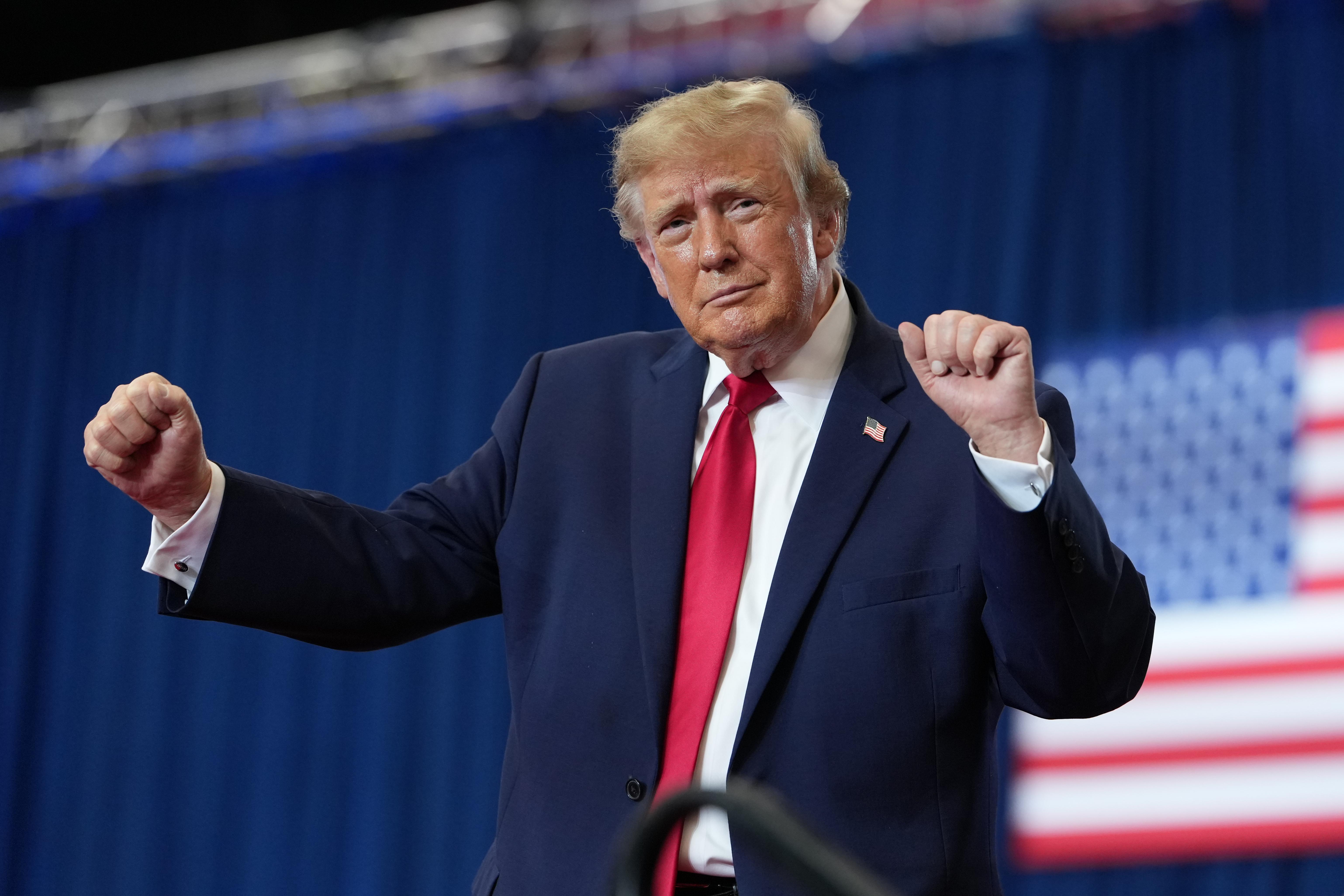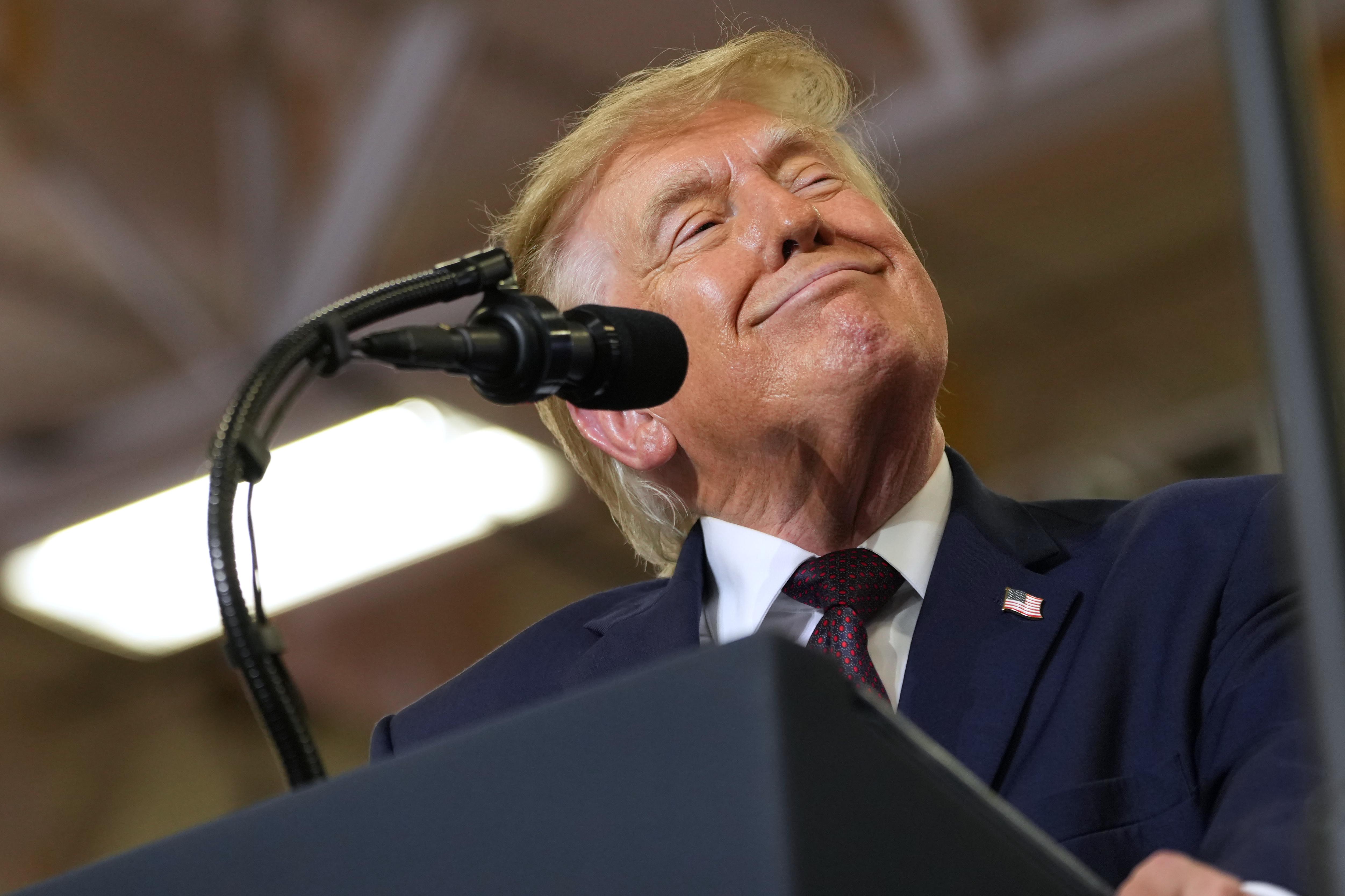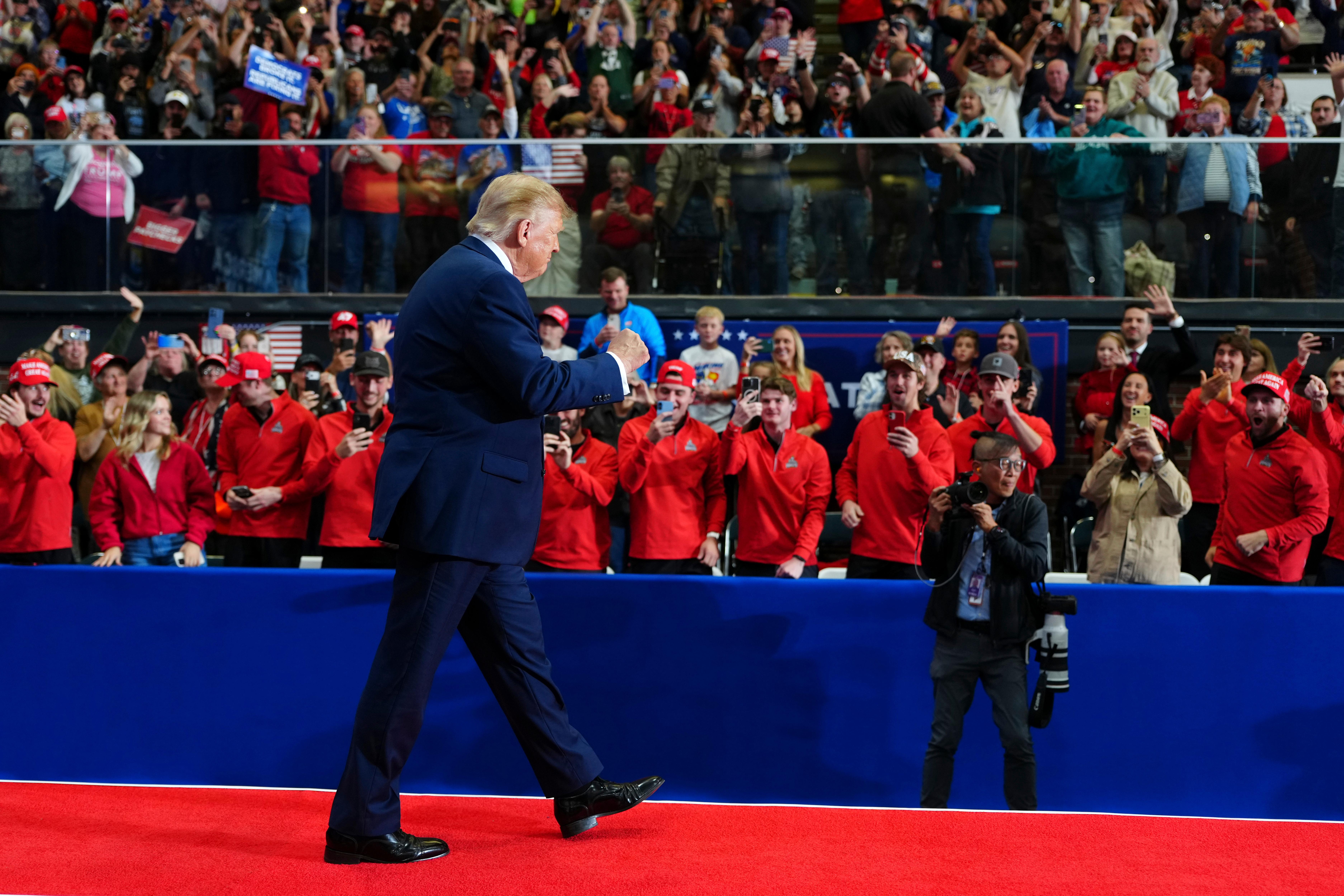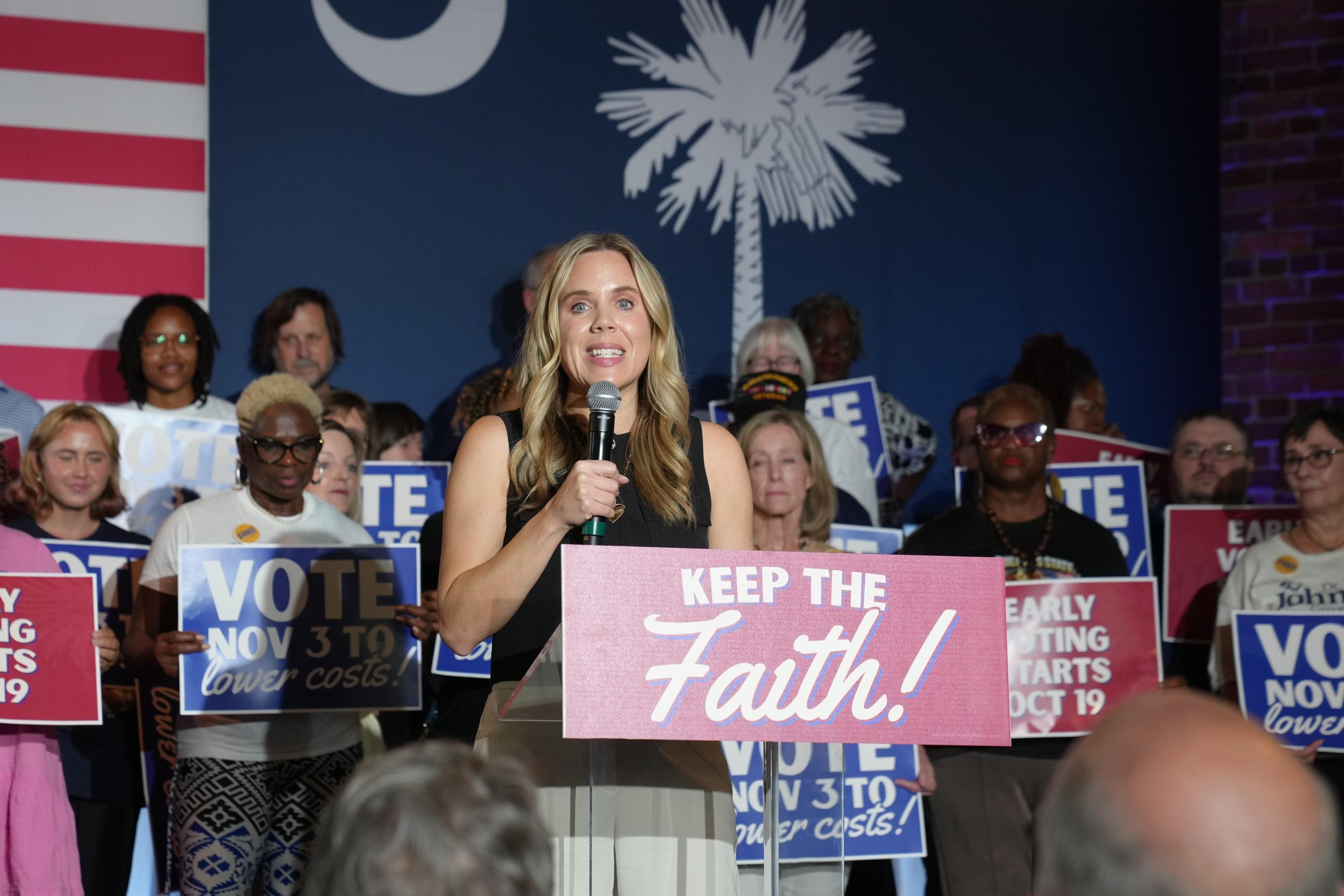
WASHINGTON (AP) — President Donald Trump rallied with Republican supporters in Florida on Friday while former President Bill Clinton spoke to Democrats just two states over in Mississippi, both of them beseeching voters to head to the polls for the midterm election that will determine which party controls Congress.
“These are the most important midterm elections ever,” Trump told his crowd in Daytona. Just an hour earlier, Clinton, on a stage in Tupelo, gave a similar argument by invoking a third president — a Republican.
Get The Latest News!
Don't miss our top stories and need-to-know news everyday in your inbox.
“My friend George Bush once said, ‘Democracy is self-correcting.' We are about to find out in Mississippi if it’s true,” he said, ending by asking the crowd to vote for Democratic Senate candidate Scott Colom.
Millions of people across America have already heeded that call in an election that will determine whether Trump's final two years in the White House are smooth sailing with a Republican Congress, or bogged down with Democratic opposition.
Nearly 10 million more Americans had cast ballots five days before Election Day than at the same point in 2022, according to an Associated Press analysis of voting data.
The increases have been particularly pronounced in states with competitive Senate races — including Iowa and Kansas, where early voting is up roughly 30% and where Trump plans to visit on Sunday.
Democrats and Republicans each hope that rise in early voting favors them as they fight for control of Congress in an election that has turned largely on affordability issues and the president’s unpopularity.
Trump has also signaled that his administration plans to aggressively pursue an investigation into an alleged scheme to confuse voters in Alaska, another state with a competitive Senate race.
U.S. Attorney Michael Heyman in Alaska confirmed on Friday a probe — underway for months — into a candidate with the same name as the Republican incumbent.
Heyman said law enforcement assets were surged to the state this week after The New York Times reported that Democratic Senate candidate Mary Peltola’s campaign appeared to be involved in recruiting Dan J. Sullivan to run in the race alongside her Republican opponent, Sen. Dan Sullivan.
Peltola denied on Thursday that she knew anything about the work to add another candidate with her opponent’s name to the ballot.
The Justice Department said it wants to isolate ballots ranking Dan J. Sullivan to test the level of “confusion” among voters.
Trump has spent October doing rally after rally to try to energize his supporters. He briefly seemed to change strategy on Friday, saying he'd do more telerallies in the homestretch, and canceled plans to visit Iowa and Kansas this weekend.
But on Friday, Trump abruptly rescheduled back-to-back campaign rallies for those states on Sunday.
“I thought this was going to be my last one, Byron,” Trump said to Republican gubernatorial candidate Byron Donalds at his Daytona rally. “I thought this was it. I thought I could relax. Twenty-eight days in a row of this crap is a lot,” he said.
The Senate races in Kansas and Iowa will help determine whether Republicans hold onto their narrow majority in the chamber in the midterm elections.
Trump has already traveled to both states this month to boost Sen. Roger Marshall in Kansas and Republican Iowa Senate candidate Ashley Hinson, who currently serves in the House.
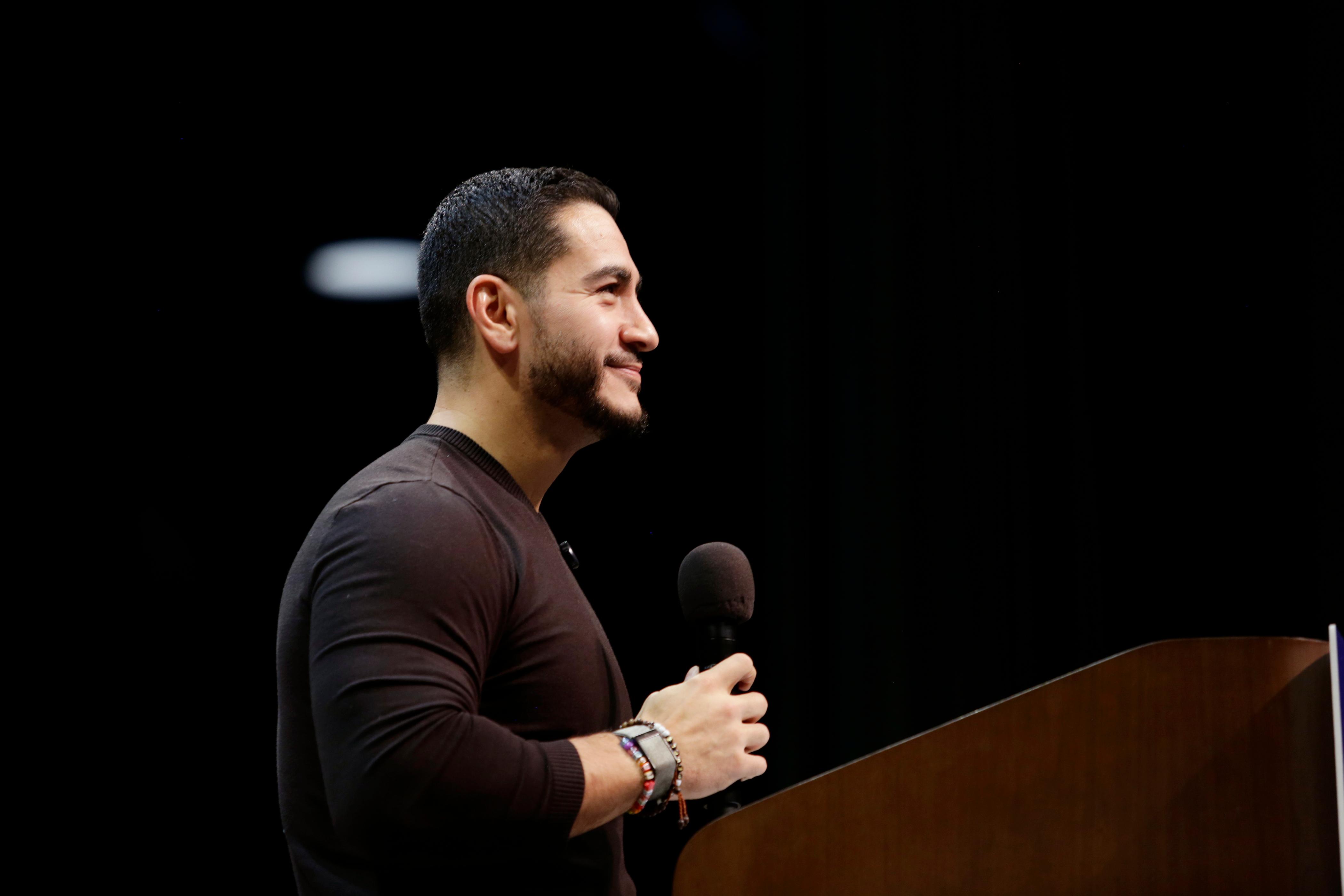
In Michigan, where Democrats had hoped to put a bruising Senate primary behind them after progressive Abdul El-Sayed narrowly defeated Rep. Haley Stevens in August, fighting between the rivals again dominated headlines.
Stevens reemerged in the final week before the general election, appearing on CNN to reaffirm that she would vote for El-Sayed while calling on him to repair relations with Jewish and Black voters. Her appearance came hours after her fiance said he would vote for El-Sayed’s Republican opponent, Mike Rogers.
Then on Friday, after agreeing to campaign alongside El-Sayed and Rep. Jim Clyburn of South Carolina in Detroit on Sunday, Stevens released a lengthy statement on social media criticizing her former rival and demanding he condemn an advertisement linking U.S. support for Israel to rising grocery prices and address concerns about his past rhetoric.
“Abdul promises to get money out of politics,” Stevens wrote. “He can begin by getting Israel out of his explanation for everything Michigan cannot afford.”
El-Sayed has apologized for some of his past comments while attempting to unify Democrats. But in a statement Friday, El-Sayed touted his defeat of Stevens and said that while she “seems intent on relitigating a primary ... let's all focus on the task at hand: beating Mike Rogers."
Early voting is significantly outpacing the last midterm election, with millions more Americans casting ballots in advance.
In Texas, where voters are deciding closely watched Senate, House and governor’s races, more than 6.3 million Texans had voted early as of Wednesday, compared with 4.2 million at the same point four years ago, a 50% increase.
Advance voting has also increased more than 30% from the same point four years ago in Maine, Michigan, North Carolina and Kansas, states with competitive Senate races. In South Carolina, where voters are choosing a successor to the late Republican Sen. Lindsey Graham, early voting is up 83%.
Historic amounts of money have flowed into this year’s midterm elections. Republicans have expressed concerns about their voters not turning out in the midst of voter dissatisfaction with Trump and high costs, issues Democrats have focused on in their campaigns.
___
Associated Press writers Meg Kinnard and Will Weissert in Washington and Jesse Bedayn in Austin contributed to this report.
Follow the AP’s coverage of the 2026 midterm elections at https://apnews.com/hub/elections.