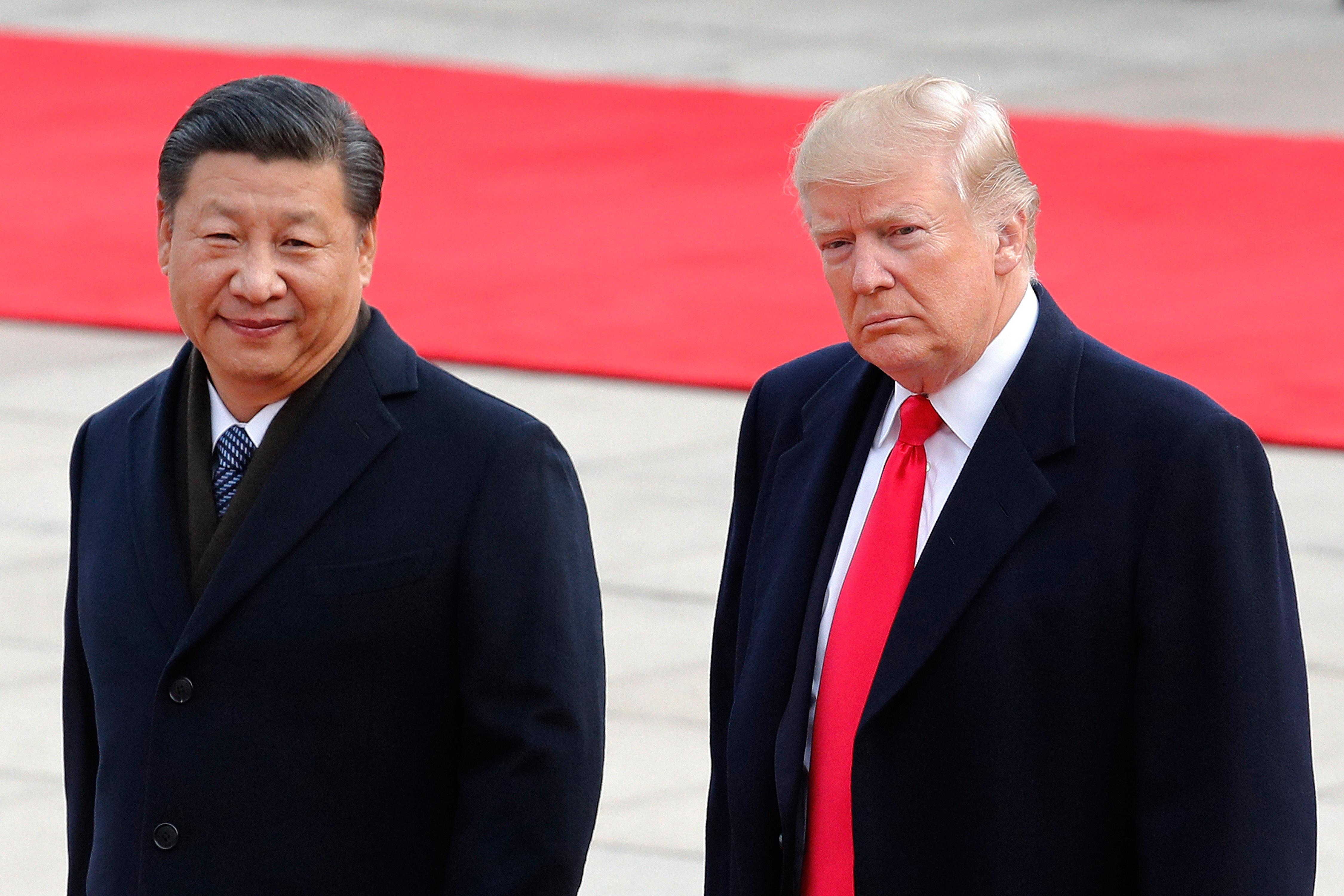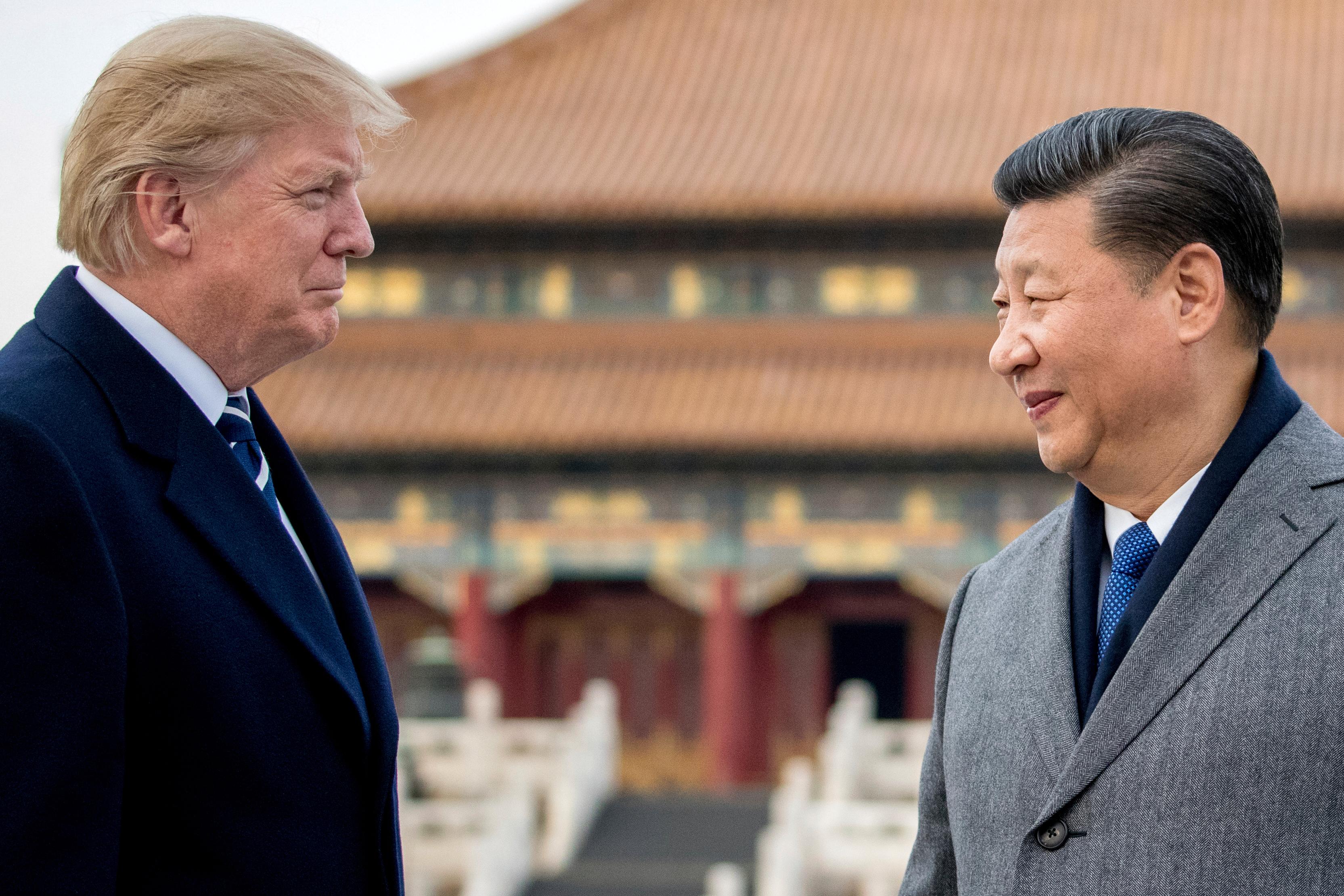
When Chinese President Xi Jinping arrives in Washington on Wednesday, he’s expected to get a rare greeting from President Donald Trump, who'll be on the tarmac to welcome his counterpart’s plane instead of waiting for him to drive up to the White House. Trump’s decision to greet Xi shows how far the U.S. president is going to honor China’s leader as he makes his first state visit in more than a decade.
Also, Trump’s AI-fueled vision for a drone port he intends to install atop the new White House ballroom includes missile-bearing unmanned aerial vehicles and gun-toting troops. But what hasn't been previously reported is the presence of a drone port a few hundred feet away, run by the U.S. Secret Service and not the military, which is already quietly operational.
Get The Latest News!
Don't miss our top stories and need-to-know news everyday in your inbox.
Here's the latest:
Saudi Arabia is facing increasing attacks from Yemen’s Iran-backed Houthi rebels.
Speaking to reporters Wednesday on the sidelines of the U.N. General Assembly, Rubio pledged for the second time in three days that the United States will “live up” to its commitments to the Saudis but declined to say what that would entail.
“They are a strategic defense partner. The U.S. has made commitments to them. We will live up to those commitments,” he said, adding that “obviously, the president has many options available to him.”
He said the U.S. cannot simply walk away and declare victory over Iran, arguing that the U.S. must ensure the Islamic Republic never develops a nuclear weapon.
“The idea that the world’s leading sponsor of terrorism would be in possession of nuclear weapons is simply unacceptable,” Rubio told reporters on the sidelines of the U.N. General Assembly, noting that many U.N. members had voted in the past “in support of that principle.”
Trump’s efforts to contain Iran’s nuclear program aren’t limited to last year’s bombings of its nuclear facilities, Rubio said, adding that Trump is “thinking about the next generation.”
Meanwhile, Rubio said the U.S. military is ensuring that part of the Strait of Hormuz is open to commercial oil tankers, which are increasingly traversing the strait to deliver oil around the world.
Rubio said the U.S. is frustrated by lack of progress in making peace in Sudan, urging foreign actors he didn’t name to pressure their allies in Sudan to settle the devastating conflict.
“That crisis would not be happening were it not for the active participation of external actors that are feeding one side of that conflict or another,” he told reporters at the United Nations General Assembly. ” It’s growing increasingly frustrating.”
U.N. experts and U.S. congressmen have accused the United Arab Emirates of supporting the paramilitary group, the Rapid Support Forces, which has been fighting the Sudanese military for over three years. Egypt and Turkey back the military. The UAE denies it’s supporting the RSF, a group blamed for most of the atrocities in the war that killed at least 59,000 since 2023.
Rubio says both Russia and Ukraine have expressed interest in a limited ceasefire that would halt attacks on grain shipments and each country’s energy sectors.
Speaking to reporters Wednesday after meeting with Russian Foreign Minister Sergey Lavrov on the sidelines of the U.N. General Assembly, Rubio said reaching even a partial deal would be difficult but worthwhile even if it doesn’t completely end the conflict.
“It won’t be easy but it’s something that both sides have expressed an interest in,” he said, noting that Ukrainian President Volodymyr Zelenskyy has publicly endorsed such a plan. “If we can play a constructive role in making that happen, we would be very open to, again, recognizing it doesn’t end the war, but it does deal with something, and maybe it can serve as the baseline or a platform for a broader agreement.”
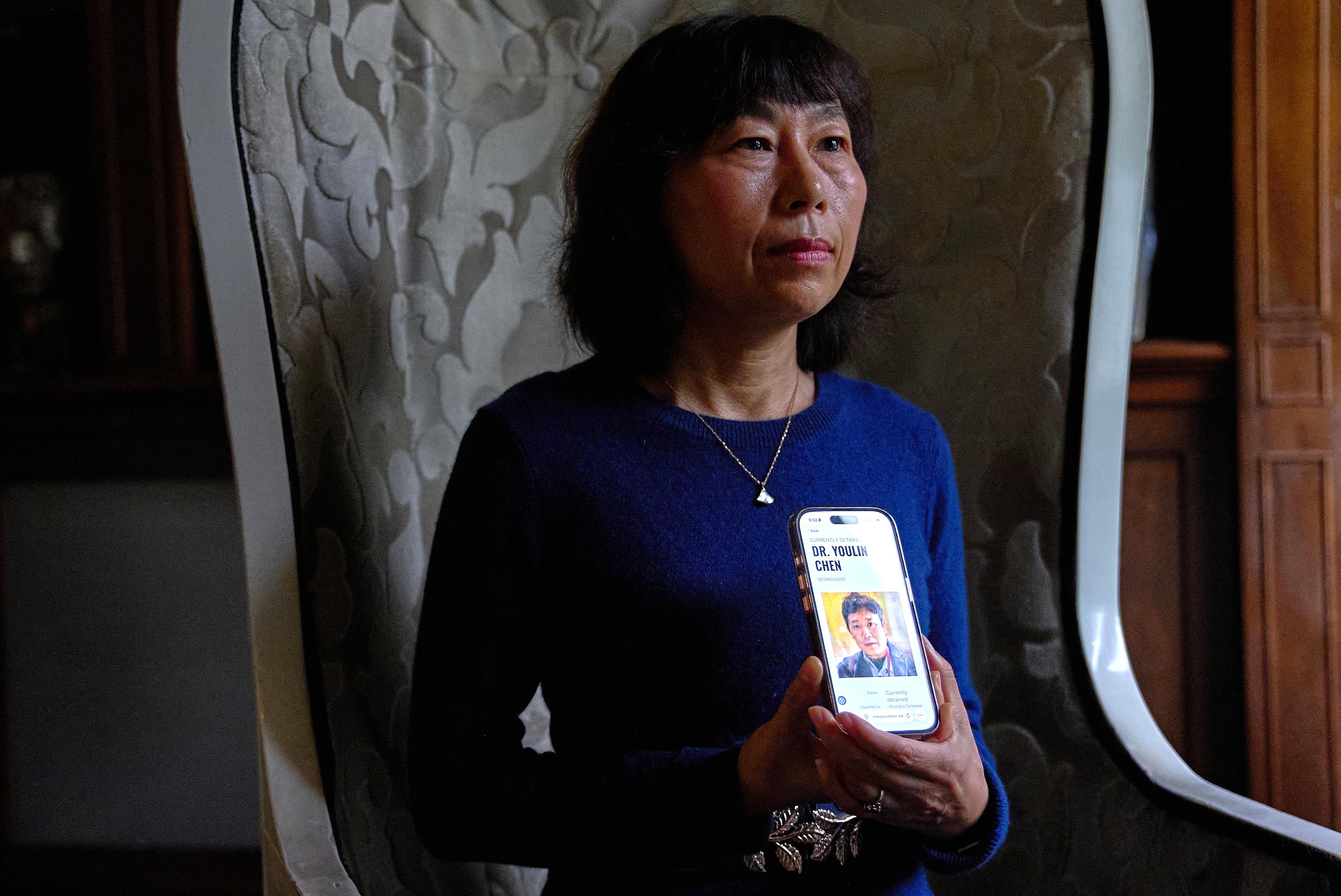
His department has designated two U.S. citizens, Youlin Chen and Min Zin, as wrongfully detained in China, and President Trump is expected to raise their cases when hosting Chinese leader Xi Jinping this week.
“The case of unlawfully and wrongfully detained Americans is always raised not just at our meetings, but in any engagement that we have and in our communications with any country around the world,” Rubio said. “This is a constant under this administration.”
Officials with the Board of Peace, the body President Trump established to oversee the fragile ceasefire in the Israel-Hamas war, acknowledged Wednesday that progress has been slow but said they’re moving forward with the ambitious plan.
Trump’s ceasefire plan brought an end to the heaviest fighting. But nearly one year later, its broader goals, including disarming Hamas and beginning reconstruction, haven’t taken place.
“Given the complexities of what we’re dealing with, I think we’re making slowly but steady and steadily, progress,” the board’s director general, Nickolay Mladenov, said on the sidelines of the U.N. General Assembly.
While the board announced plans for over $2 billion in projects, they gave no timeline for when they would take place.
Steve Witkoff, Trump’s Mideast envoy, added that various people behind the board “can point to real progress.”
“There is a cease fire, imperfect as it may be, but it still exists,” he said.
He said the U.S. and China must interact at the highest levels because the two countries are “the two largest economies in the world” and “probably the two most powerful militaries in the world.”
“The idea that we would not interact with them at the highest levels is irresponsible. It’s outrageous. We have to,” Rubio said, hours before President Trump will greet Chinese leader Xi Jinping on the tarmac of Joint Base Andrews in a rare welcome ceremony.
“I think it’s just responsible statecraft for our leaders to speak and meet with one another,” Rubio said.
Rubio said the U.S. needs to balance arms sales to Taiwan with “our industrial capacity and our military industrial base.”
“Anytime we do any sales, ... it is always balanced against what are our own needs in different parts of the world and whether we can afford to sell something, because we may need it for ourselves,” Rubio said.
The Trump administration has paused arms sales to Taiwan, apparently after the U.S. president visited Beijing in May. Beijing considers Taiwan to be part of its territory and has urged the U.S. side to handle the Taiwan issue with prudence.
The U.S. secretary of state gave few details about Trump’s meeting Tuesday with Delcy Rodríguez, acting president of Venezuela.
But he did say steps have been discussed to help rebuild “confidence” in the country’s economy, so that the millions of Venezuelans living abroad will feel comfortable going back to the country, mentioning debt restructuring and the “political transition process” currently underway.
“We’d like to see a point where they feel and have confidence that they can actually go back and rebuild what they lost, or rebuild what was taken on the political front, but also on the economic front,” Rubio said. “And for that to happen, we need to make more progress on these talks with regards to the transition and reconciliation.”
“It could metastasize and spread into other places,” Rubio told reporters at the United Nations, adding that the war “could grow into somewhere else, be it through a hybrid attack, be it through a sabotage attack, be it through a misunderstanding.”
Rubio said the U.S. is monitoring the situation closely and has raised its concerns “with the right people at the right levels.”
Meanwhile, Rubio said the war won’t end on the battlefield but in negotiations. He said he hopes the U.S. can play a positive role in bringing peace, noting that Russia and Ukraine are trading blows to each other’s energy infrastructure as winter nears.
Rubio said “of course” when asked about future investments by American businesses in Cuba. But the secretary of state added Wednesday that there’s currently no confidence in the private sector that companies would be able to make back their investment until Cuba’s government changes.
“There’s simply no legitimacy or credibility that this regime will ever live up to these conditions because they never have before,” Rubio said. “No one is going to invest in Cuba under their current governance model. They’re just not going to do it.”
In January, Trump threatened tariffs on any country that sells or provides oil to the island. Earlier this month, the U.S. government slapped new sanctions on Cuba in a fresh push to strangle its economy.
Talking to reporters on the sidelines of the United Nations General Assembly, U.S. Secretary of State Marco Rubio said Wednesday that Trump remains open to a deal with Iran “that allows Iran to be what it should be, which is a great and prosperous country.”
But Rubio said that’s hampered by Iran’s insistence “on the desire for a nuclear weapon,” as well as “their support of terrorism.” If that continues, Rubio said Trump could exercise “a number of options,” including further military action.
Rubio wouldn’t give details of this week’s talks but did note “consensus” between the U.S. and the Gulf Cooperation Council on “deeply problematic” attacks by Houthi rebels in Yemen, and that the Strait of Hormuz needs to remain “open and free without attack.”
The Chinese ambassador drew four red lines for the U.S., ahead of Chinese leader Xi Jinping’s visit to Washington.
In an editorial published Wednesday in the ruling party’s flagship newspaper People’s Daily, Xie Feng, China’s top diplomat in Washington, said China’s sovereignty, security and development rights cannot be violated.
“The four red lines — Taiwan, democracy and human rights, China’s political system, and its development rights — shall not be challenged,” Xie wrote.
The senators said they’re concerned by Trump’s “description of Taiwan as ‘a very good negotiating chip’ in engagements with Xi.”
Sen. Mitch McConnell, the former Republican leader, and his colleagues, wrote in a letter to Secretary of State Marco Rubio that the Senate
has already approved some $1 billion in security assistance alongside millions in aid that affirms the U.S.-Taiwan security relationship and is also central to U.S. security interests.
They warned the Trump administration against freezing those funds.
“It is difficult to imagine how the United States might credibly project influence deterrence in the Indo-Pacific,” they wrote, “if the price of keeping up diplomatic appearances is denying our partners key deterrent capabilities.”
“It must be understood by Mr. Trump and those who seek to bully us that we are ready for dialogue and diplomacy and negotiations without accepting the language of force,” Iranian President Masoud Pezeshkian said Wednesday.
He also said one thing that was measurably false: “We did not hit civilian populations.” Mariners and migrant workers in the region have been among the civilians killed in Iran’s attacks since the war began.
In a defiant speech, Iranian President Masoud Pezeshkian said “peace will not come in the field of battle.”
Pezeshkian held up photos of the late Supreme Leader Ali Khamenei and the more than 150 school children killed in the first days of the war.
“We have only defended ourselves. We are not terrorists,” Pezeshkian said at the General Assembly. “Our innocent people have been the targets of cowardly attacks and aggressions imposed upon our country. And we defended ourselves with utmost strength. America and Israel attacked us.”
He added of the United States: “Yes they did hit us, but we did not bend the knee.”
The new AP-KFF poll found that rural voters overall don’t perceive much positive impact from the Trump administration’s healthcare policies.
That comes as those policies have been a top priority for Republican leaders, who’ve promoted efforts to lower drug costs and touted a $50 billion rural health program.
Only 17% of rural voters said the Trump administration’s healthcare policies have had a “positive impact” on their healthcare costs. About 4 in 10 said they’ve had “no impact” and 41% said they’ve had a “negative impact.”
A year after the passage of the Rural Health Transformation Program, more than 8 in 10 rural voters said they’d heard either “a little” or “nothing at all” about the health fund, according to the survey.
About half of rural American voters believe the economy is worse off now than when President Trump returned to office, according to a new AP-KFF poll of more than 2,000 rural registered voters.
The costs of groceries, gas, healthcare and monthly utilities emerged as top pain points for rural voters in the survey. Majorities said they are “very” or “somewhat” worried about being able to afford each.
The findings suggest many rural voters haven’t turned on Trump, but that they also largely don’t think he’s delivered on the economic renaissance he promised.
About half of rural voters approve of how Trump is handling the presidency, while only about 4 in 10 approve of Trump’s performance on the economy.
The U.S.-backed Board of Peace’s plan to begin reconstruction and governance in Gaza comes as President Trump’s ceasefire struggles to stay afloat.
At a meeting of the group’s board, the governors unveiled a 66-project blueprint to get things started while acknowledging enormous hurdles that must still be overcome. The projects include ambitious infrastructure, education and health initiatives that are designed to support Trump’s 20-point ceasefire plan.
“The need is immense,” the board said, noting that full reconstruction from the physical damage across Gaza will cost roughly $35.2 billion over the medium-term and another $71.4 billion in the next 10 years.
About 4 in 10 Americans, 43%, have a positive view of socialism, according to the new Gallup poll.
That’s largely unchanged from last year, when 39% of Americans had a favorable image of socialism. The polling shows about two-thirds of Democrats think positively about socialism, as do 45% of independents. Only 14% of Republicans feel the same way.
The polling found young adults — those 18 to 34 — are more likely to have a positive view of socialism than capitalism. About 6 in 10 young adults say they view socialism favorably, compared to 43% who say that about capitalism.
On the other hand, older adults see capitalism more positively. About two-thirds of those 55 and older have a positive view of capitalism, compared to about one-third who say that about socialism.
It’s called Imperia — and the first lady says it’s her new initiative focused on helping women become leaders and achieve economic power.
Members include CEOs, founders, innovators, entrepreneurs and others, she said during an in-studio interview in New York on Fox News Channel’s “Fox & Friends.”
Asked what the initiative will achieve, the first lady, who’s also a businesswoman, cited innovation and investment, strategic partnerships and economic prosperity for women.
Melania Trump also rang the opening bell for New York Stock Exchange in January before the release of her Amazon documentary, “Melania.”
“He’s coming on our soil, and we need to welcome them with the most respect,” she said of Xi and his wife, Peng Liyuan, during an interview Wednesday on Fox News Channel’s ”Fox & Friends.”
U.S. futures are slightly higher and hovering near record highs while oil prices declined after President Trump said officials from the United States and Iran met on the sidelines of the U.N. General Assembly in New York this week.
Futures for the S&P 500 and Dow Jones Industrial Average both gained 0.1% on Wednesday. Nasdaq futures were basically flat.
Trump talked of the meeting with Iran after telling the assembly Tuesday that he would have to make a choice, including whether to “annihilate” the Islamic Republic, if the sides fail to reach an agreement.
As China’s Xi Jinping arrives in Washington to meet with President Trump, Taiwan expressed confidence that U.S. arms sales to the island that Beijing claims as its own will continue — despite China’s pressure.
China has pressed Washington to halt the arms sales, most prominently during a summit in May between Trump and Xi in Beijing. After that meeting, the United States paused the sale of a record-breaking $14 billion package — and Trump described arms sales to Taiwan as a “very good negotiating chip” with China.
Still, the U.S. government and Congress have “repeatedly expressed support for Taiwan’s self-defense capabilities,” Taiwanese Defense Ministry spokesperson Maj. Gen. Chiao Fu-chun told reporters in the southern city of Tainan.
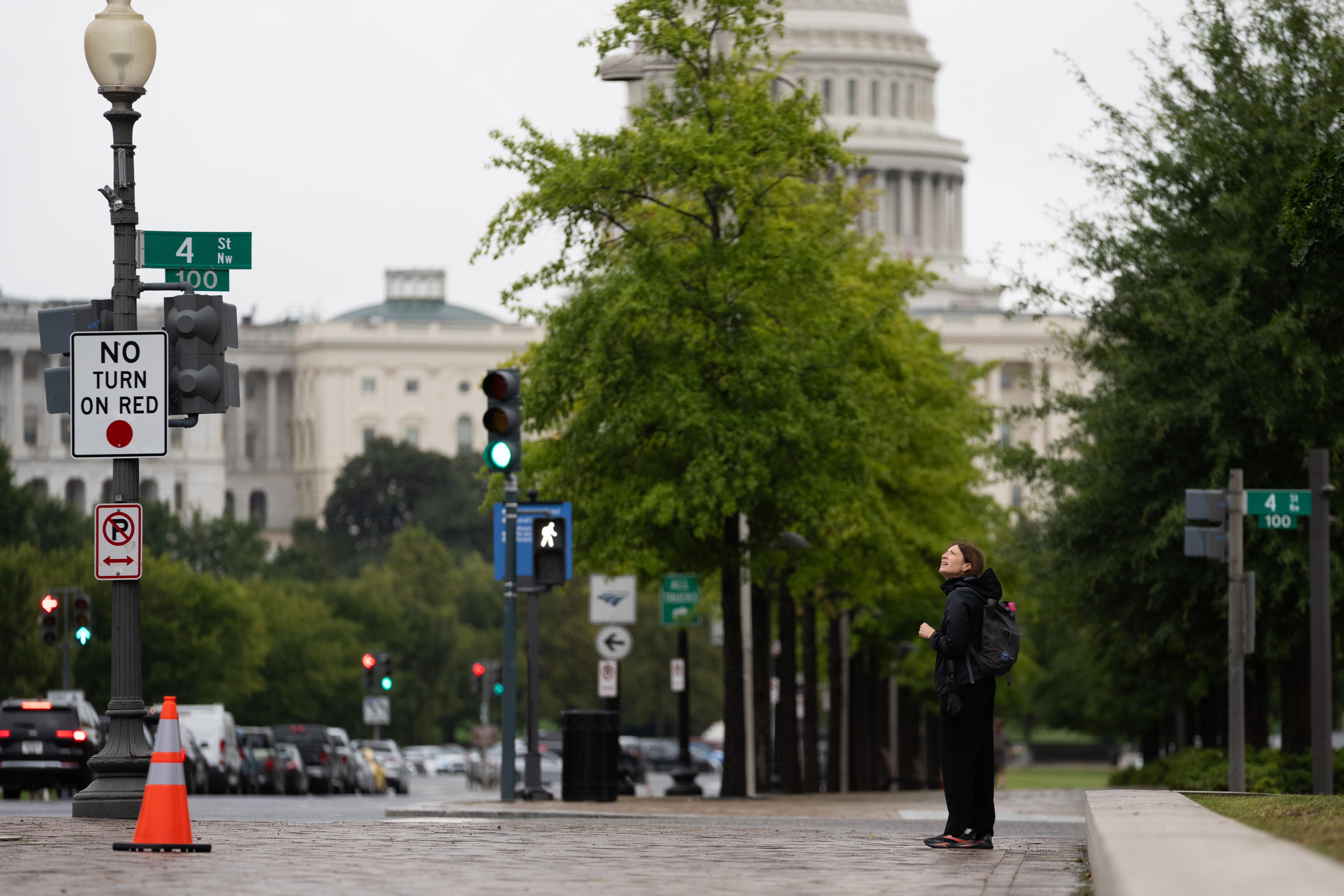
Trump’s AI-fueled vision for a drone port he intends to install atop the new White House ballroom includes missile-bearing unmanned aerial vehicles and gun-toting troops, ostensibly to protect the 18-acre complex and the nation’s capital.
A few hundred feet away, a drone port, run by the U.S. Secret Service and not the military, is already quietly operational. Equipped with cameras and sensors to scope out potential threats from a bird’s-eye view, the small UAVs stand on alert in four gray weatherproof boxes until deployed at officers’ commands.
The agency is using a model known as “drone as first responder,” deploying speedy unarmed drones from outdoor stations to serve as flying cameras. That model has been adopted by hundreds of police agencies across the U.S., often powered by AI software to help dodge obstacles or track targets.
The existence of the surveillance drones on a Treasury Department building adjacent to the White House complex has not been previously reported, and could undercut Trump’s legal claims that the ballroom construction is necessary “to protect the White House and surrounding region from aerial attacks.”
Xi has departed Beijing on Wednesday afternoon local time for a state visit to the U.S., China’s official news agency Xinhua said. Accompanying him on the visit are Xi’s wife Peng Liyuan, China’s ruling Communist Party’s Politburo Standing Committee member Cai Qi and Foreign Minister Wang Yi, it said.
When Chinese President Xi Jinping arrives in Washington on Wednesday, he’s expected to get a rare greeting from President Donald Trump, who will be on the tarmac to welcome his counterpart’s plane instead of waiting for him to drive up to the White House.
Trump’s decision to greet Xi at Joint Base Andrews shows how far the U.S. president is going to honor China’s leader as he makes his first state visit in more than a decade.
The White House hasn't released many details about Wednesday’s greeting, but Trump is expected to participate in an arrival ceremony at the base with Xi and his wife. The salutation will kick off a three-day visit that’s expected to be saturated with pomp, even by White House standards. The state visit, complete with a formal state dinner at the White House on Thursday, is supposed to reciprocate for the ceremonial grandeur that marked Trump’s May visit to China.
But it’s also a showy patina at a time when tensions between the two geopolitical rivals are high over trade, artificial intelligence, Trump’s war with Iran and China’s designs on Taiwan.