Americans' satisfaction with the quality of K-12 education in the country has hit a low point, driven by a growing political divide and concerns that schools are not preparing children for college and future jobs.
Just 32% of American adults say they are “completely” or “somewhat” satisfied with the U.S. school system, according to an August poll published Tuesday by Gallup and the Walton Family Foundation and shared exclusively with The Associated Press. That’s an 11-point drop over the past two years and the lowest since Gallup began polling on the subject 27 years ago.
Get The Latest News!
Don't miss our top stories and need-to-know news everyday in your inbox.
At the same time, dissatisfaction has increased to a high of 67%.
Experts on education and school policy say the findings are deeply concerning but not surprising.
Democrats are driving the recent slide, with their satisfaction dropping about 19 points since President Donald Trump’s second term began in 2025. Independents’ satisfaction appears to be down as well, about 10 points from 2024, while Republicans' satisfaction has also fallen slightly, about 6 points.
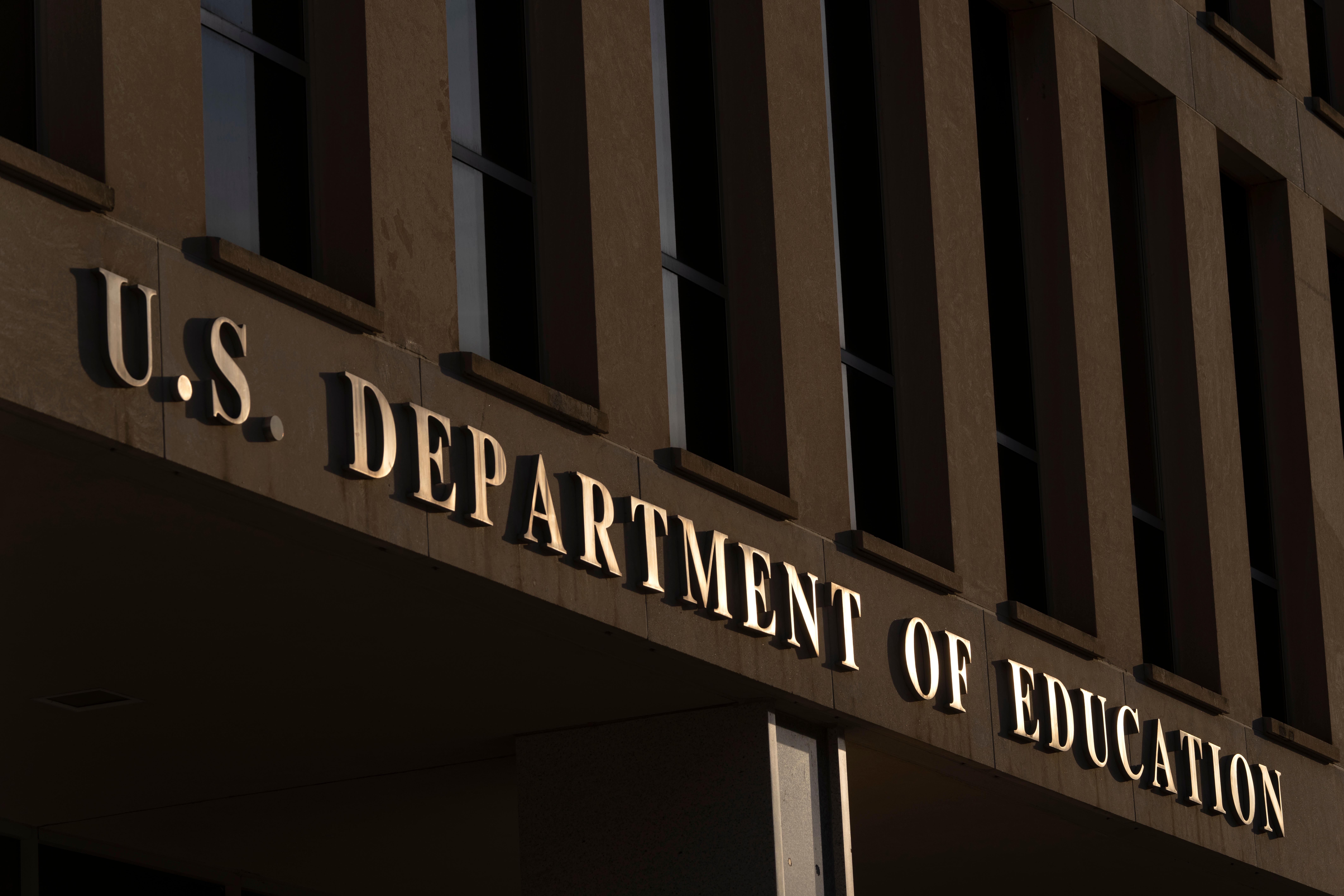
The Trump administration has contributed to the erosion in public confidence by depicting schools as political battlegrounds, raising concerns about what teachers should be allowed to say in the classroom and moving to abolish diversity programs and dismantle the Education Department, said Jack Schneider, director of the Center for Education Policy at the University of Massachusetts Amherst.
“It’s terrifying. We’re on the precipice of the dissolution of the public education system as we have known it,” Schneider said. Democrats, he said, are also particularly concerned by Trump’s signature school choice program that will use taxpayer-supported scholarships to pay for kids' private school tuition.
But politics alone does not explain the dissatisfaction. Gallup polling shows public confidence in schools generally has declined since the COVID-19 pandemic closed classrooms, exacerbating academic declines, mental health issues and other problems.
Headlines have consistently told a story of a national drop in test scores, especially in reading, which sends a message that schools have struggled to rebound since COVID lows.
“We’ve had a drumbeat of bad news about test scores and other social trends that could be driving this,” said Sarah Reckhow, a political science professor at Michigan State University who specializes in public policy. “There’s a ton of debate, discussion and noise about technology and AI in education," she said. And recently, kids' screentime at school has dominated education headlines locally and nationally.
However, parents have a different view about their own children’s education. About two-thirds of parents with school-age children say they are satisfied with their child’s education, which is also a low point in the trend — parents haven't had a similarly discontented view since 2013 — but double the 32% satisfaction with U.S. education among adults overall.
That reflects a steady trend of parents feeling more confident about their own schools than the narrative they hear from elected officials and headlines about the national picture.
“When people weigh in about the nation’s schools, what they are commenting on are 98,999 schools that they haven’t set foot in,” Schneider said.
A separate survey, also conducted in August by Gallup and Walton, asked Americans how well they thought schools were preparing kids for the future. Only about 2 in 10 said schools are doing a “good” or “excellent” job teaching critical thinking or preparing students for the current workforce. Schools' highest marks were for preparing students to adapt to new technologies, with 44% giving schools a high ranking in this area.
Gallup senior education researcher Zach Hrynowski says the findings highlight a frustration with institutions more broadly.
“People have a general negative vibe about everything in the country right now,” Hrynowski said. “People are frustrated, and don’t think any institution is working particularly well.”
____
The first Gallup poll was conducted by telephone from Aug. 3-24, 2026, using a random sample of U.S. adults ages 18 and older. The margin of sampling error for U.S. adults overall is plus or minus 4.0 percentage points. The margin of sampling error for parents of K-12 students is plus or minus 8.3 percentage points.
The second poll of 2,143 U.S. adults ages 18 and older was conducted Aug. 3-17, 2026, using a sample drawn from Gallup’s probability-based panel, which is designed to be representative of the U.S. population. The margin of sampling error for U.S. adults overall is plus or minus 3.0 percentage points.
The Associated Press receives support from the Walton Family Foundation for coverage of water and climate.
____
The Associated Press’ education coverage receives financial support from multiple private foundations. AP is solely responsible for all content. Find AP’s standards for working with philanthropies, a list of supporters and funded coverage areas at AP.org.