On June 7, one of the most consequential events in world history took place in 1494, when Spain and Portugal signed the Treaty of Tordesillas. The agreement drew an imaginary line through the Atlantic Ocean and divided newly claimed lands outside Europe between the two kingdoms. At the time, it was meant to reduce conflict between two rising maritime powers competing for trade routes, territory, and influence. Its effects reached far beyond diplomacy. The treaty helped shape the future of Latin America, influenced patterns of language and religion across continents, and became an early example of European powers trying to organize global expansion by agreement rather than war. It still matters because its consequences can be seen in the map of the modern world, especially in why Portuguese became the main language of Brazil while most of the rest of South America became Spanish-speaking.
Get The Latest News!
Don't miss our top stories and need-to-know news everyday in your inbox.
The treaty came at a moment when ocean travel was rapidly changing global connections. Christopher Columbus’s first voyage had returned only a few years earlier, and European rulers were eager to claim lands and trade opportunities overseas. With support from the papacy, Spain and Portugal negotiated a boundary intended to settle rival claims. In practice, the line was vague, and the people already living in the affected regions had no role in the decision. Even so, the agreement guided later colonial expansion and helped define the early Atlantic world. Its legacy was political, cultural, and economic, reaching from Europe to Africa and the Americas.
More than three centuries later, June 7 again marked a turning point in global politics. In 1628, the Petition of Right was presented to King Charles I of England. The document challenged the king’s use of taxation without parliamentary approval, arbitrary imprisonment, and the forced quartering of soldiers in private homes. Although it did not end political struggle in England, it became an important statement about limits on royal power. Over time, its principles influenced constitutional government in Britain and beyond. It is remembered as one step in the long development of ideas about legal rights and the rule of law.
Another event on this date showed how modern warfare could be transformed by a single day. In 1862, the United States and Britain agreed to a treaty to suppress the Atlantic slave trade more effectively. The trade had already been outlawed by both countries, but illegal trafficking continued. The treaty allowed mutual searches of suspected slave ships under certain conditions. While it did not end slavery itself, it strengthened international efforts against the forced transport of enslaved people across the Atlantic. That made it part of a broader nineteenth-century movement toward ending one of the most brutal systems in modern history.
Only a few years later, in 1893, Mohandas Karamchand Gandhi experienced a personal humiliation in South Africa that helped shape his later public life. While traveling by train, he was removed from a first-class compartment despite holding a valid ticket because of racial discrimination. This was not yet the start of the mass campaigns for which he became famous, but it was an important moment in his political awakening. The incident pushed him toward organized resistance and, in time, toward methods of nonviolent protest that influenced movements for civil rights and independence around the world.
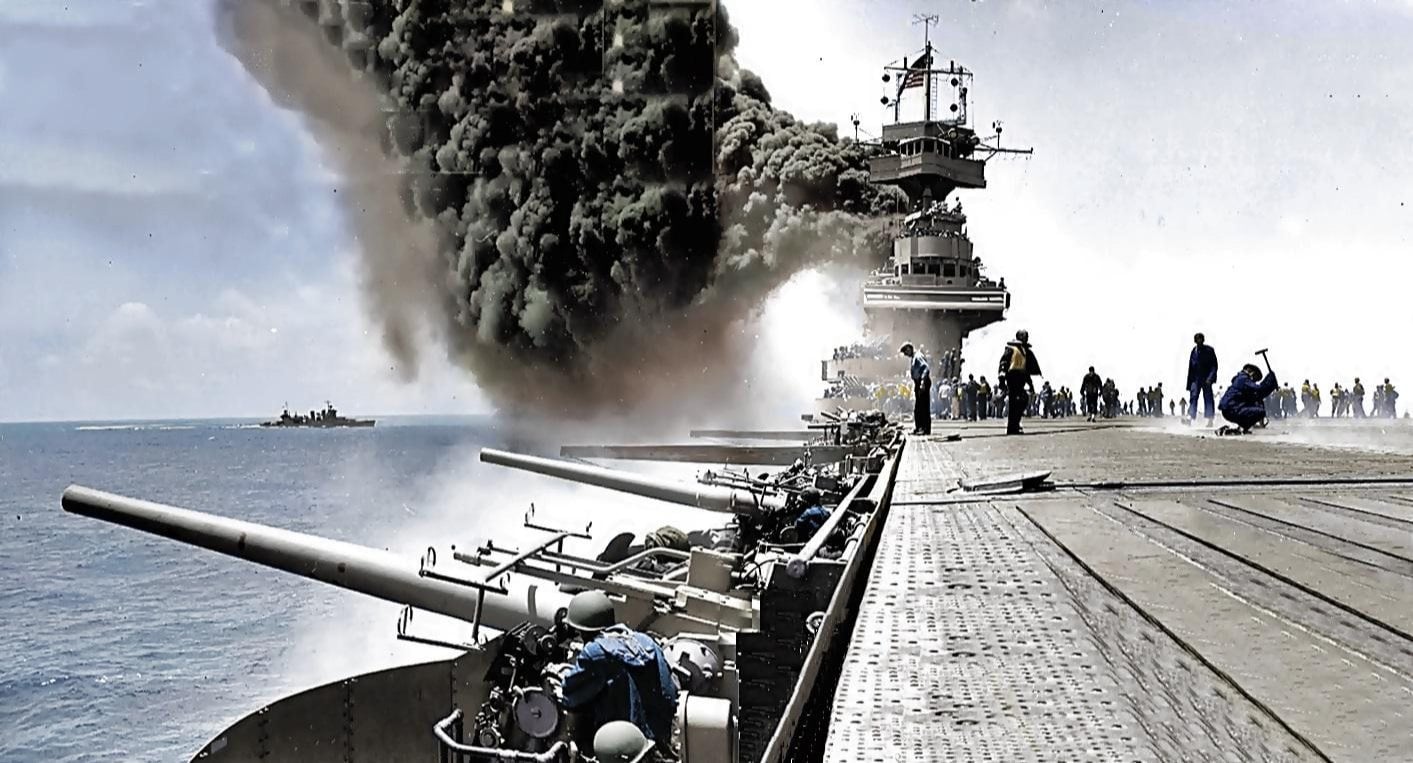
June 7 also carries major military significance in the twentieth century. In 1942, the Battle of Midway ended with a decisive American victory over Japan in the Pacific during the Second World War. Over several days, U.S. forces sank four Japanese aircraft carriers while losing one of their own. Midway did not end the war, but it shifted the balance in the Pacific. Japan lost experienced pilots, ships, and momentum that were difficult to replace. For the United States and its allies, the battle marked the beginning of a strategic turn from defense to a more sustained offensive. Historians often point to Midway as one of the war’s key naval turning points.
A quarter century later, conflict in the Middle East produced another major date. In 1967, during the Six-Day War, Israeli forces took East Jerusalem. The war involved Israel and several neighboring Arab states and led to rapid territorial changes in a matter of days. The capture of East Jerusalem carried military, political, and religious significance, and it became one of the war’s most enduring and disputed outcomes. The events of that week continue to shape diplomacy, national narratives, and regional tensions in the present.
Science and exploration also have a place on this day. In 1929, the sovereign state of Vatican City was formally established as the exchange of ratifications for the Lateran Treaty took effect. Though small in size, the new state had broad symbolic importance because it settled a long dispute between the Italian state and the papacy. It created a lasting framework for the Catholic Church’s independence in Rome. Then, in 1971, the Soviet spacecraft Soyuz 11 launched toward the world’s first space station, Salyut 1. The mission was a landmark in human spaceflight because it showed that crews could live and work in an orbital station, an idea that would later become central to space programs around the world. The mission ended tragically after reentry, but its contribution to long-duration space travel remained important.
In culture and media, June 7 includes moments that reflected changing public tastes and new forms of communication. In 1965, the U.S. Supreme Court issued its decision in Griswold v. Connecticut, striking down a state law that restricted access to contraception for married couples. Although a legal case rather than a cultural event in the narrow sense, it had a wide impact on family life, privacy, and social debate. Its influence reached far beyond one state and became part of a larger twentieth-century discussion about personal rights and the relationship between government and private life.
Several notable people were born on June 7. In 1848, Paul Gauguin was born in Paris. He became one of the most influential post-Impressionist painters, known for bold color, simplified forms, and a style that helped open the way to modern art. His work affected artists far beyond his own generation. Another major figure arrived in 1868, when Charles Rennie Mackintosh was born in Glasgow. As an architect and designer, he blended Art Nouveau ideas with a distinct personal style and helped shape modern design in Britain and Europe.
The twentieth century brought figures from very different worlds. Jessica Tandy, born in 1909, built a long stage and screen career and later reached a wide audience through film, including her Academy Award-winning performance in Driving Miss Daisy. In music, Tom Jones, born in 1940 in Wales, became one of the most recognizable popular singers of his era, known for a powerful voice and a career that adapted across decades of changing styles. Also born on June 7, 1958, was Prince, the American musician, songwriter, and performer whose inventive blend of funk, rock, pop, and R&B made him one of the defining artists of late twentieth-century popular music.
This date also marks the passing of several important figures. In 1329, Robert the Bruce, King of Scots, died after helping secure Scotland’s independence during a critical period of medieval conflict. His legacy remained central to Scottish history and identity. Much later, in 1954, the mathematician Alan Turing died in England. Turing made foundational contributions to computer science, cryptography, and the theory of computation. His wartime codebreaking work helped Allied efforts during the Second World War, while his ideas laid groundwork for the digital age.
In 1970, E. M. Forster died, leaving behind novels and essays that explored class, empire, personal relationships, and the tensions of modern life. His works, including A Passage to India and Howards End, remained widely read because they connected literary craft with social observation.
Taken together, the events of June 7 show how a single date can hold decisions that redrew maps, battles that altered wars, legal changes that shaped daily life, and personal moments that redirected history.