Sixty-seven people lost their lives over the Potomac River on Jan. 29, 2025, when a U.S. Army Blackhawk helicopter collided with American Airlines flight 5342. It was a horrifying tragedy — and because it was entirely preventable, it was not just a tragedy, but a travesty.
Get The Latest News!
Don't miss our top stories and need-to-know news everyday in your inbox.
The National Transportation Safety Board final report on the incident left no room for interpretation: The Federal Aviation Administration’s failure to act on prior safety recommendations had led to this catastrophe.
Now, more than one year after that deadly collision, one question remains: What has the FAA done to ensure a crash like this never occurs again?
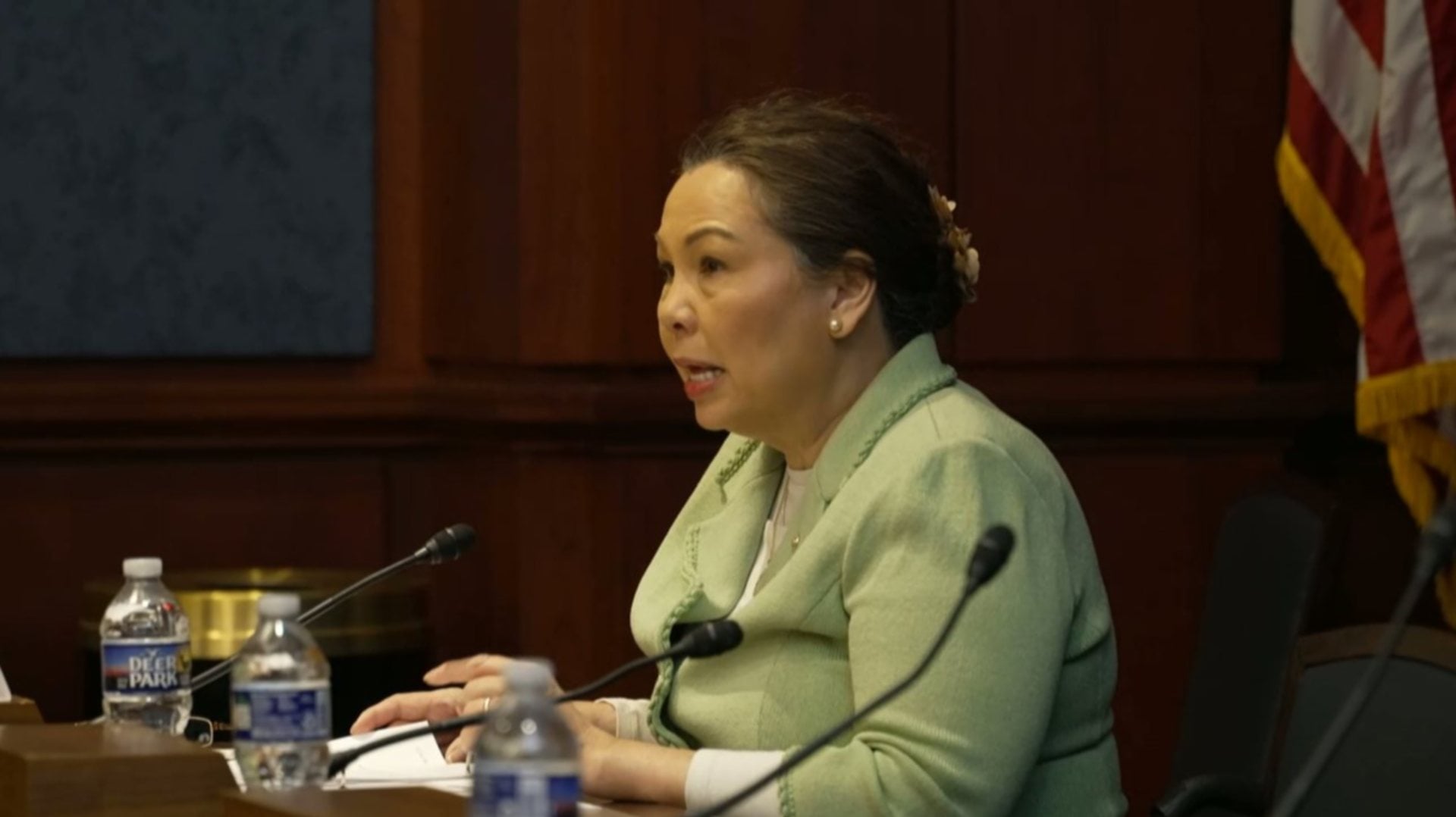
Administrator Bryan Bedford came to Capitol Hill recently, eager to claim progress. But during the hearing, he was unable to commit to implementing the National Transportation Safety Board’s recommendation. This is both disconcerting and disgraceful.
The year-long National Transportation Safety Board investigation resulted in 50 recommendations, including more than 30 directed squarely at the FAA. These are not suggestions but urgent warnings — fixes that experts know could prevent another catastrophe.
Rep. LaMonica McIver's fight to close controversial Delaney Hall ICE Facility
The public cannot accept piecemeal action. We cannot accept partial progress. We cannot accept an FAA that procrastinates until tragedy strikes again. The FAA already has the authority — and the responsibility — to implement every National Transportation Safety Board recommendation. Administrator Bedford must act.
Many of the National Transportation Safety Board’s findings from the Reagan National Airport midair collision point to issues that have been widely known for years: the air traffic controller shortage, the need for advanced safety alerting technology on aircraft and the unacceptable lack of coordinated communication between the FAA and Department of Defense.
I have repeatedly raised these concerns. Almost three years ago, in a November 2023 hearing on near-misses, I warned: “Our nation is experiencing an aviation safety crisis. Near misses are happening way too frequently, and I refuse to be complacent in waiting to act until the next runway incursion becomes a fatal collision.”
In the years since, as a leader of the Aviation Safety Subcommittee, I championed measures that make our skies safer. In negotiations on the 2024 FAA Reauthorization Act, I successfully increased aviation workforce development funding by six-fold each year. I also defended the 1,500-hour rule to help ensure that pilots have high levels of training and are prepared in the case of life-threatening emergencies, a standard that stemmed from the 2009 Colgan Air flight 3407 outside of Buffalo which killed all 49 people onboard and one person on the ground.
Despite these efforts, the strain on our aviation system was too much. Heartbreakingly, on that cold January evening, the next fatal collision came.
There is a saying about aviation regulations: They are written in blood. When deadly accidents happen, we investigate and adjust our regulations to help ensure whatever went wrong never happens again. As ranking member of the Aviation Safety Subcommittee and as an aviator, I can say with confidence: It should not have taken a tragic accident to tell us that action was needed. The alarm bells were ringing, and the urgent message — devastatingly for the dozens of families who lost loved ones — went unanswered.
The next step is clear: Administrator Bedford must commit to implementing all the National Transportation Safety Board’s recommendations with fidelity.
We owe it to the victims. We owe it to every pilot, every controller, every military crew member and every passenger who boards an aircraft expecting the FAA to keep our airspace safe.
The FAA does not need more time. It needs resolve. It needs leadership. And it needs the courage to prioritize saving lives over saving face.
Sixty-seven people died because the FAA failed to act when it had the chance. The agency cannot undo that tragedy, but it can, at long last, do its part to prevent the next one.
And it must.
Opinions expressed in this section are solely those of the individual authors and do not represent the views of RiverBender.com or its affiliates. We provide a platform for community voices, but the responsibility for opinions rests with their authors.