
Some of the oldest monuments on Earth work like giant calendars.
Get The Latest News!
Don't miss our top stories and need-to-know news everyday in your inbox.
That fact changes how many ancient sites look once you know what to watch for. A ring of stones, a temple doorway, a carved pillar, or a bonfire ritual was often more than a religious symbol. It could also be a way to mark the longest day of the year and the turning point that came with it. For ancient cultures, this moment mattered deeply. It shaped farming, worship, trade, and daily routines. It also inspired stories and customs that still leave traces in modern life.
Why the longest day mattered
Ancient people did not have clocks, printed calendars, or weather apps. They learned to read the sky with care. The Sun’s path across the horizon changed over the year, and those changes were useful. They helped people estimate when to plant, when to harvest, when rivers might rise, and when animals might migrate.
The point we now call the summer solstice stood out because the Sun seemed to stop shifting northward and pause before moving back again. The word “solstice” comes from Latin roots meaning “sun” and “standing still.” That visual pause made it easier to notice and remember.
For farming communities, this was not just interesting astronomy. It was practical knowledge. Crops were growing. Grazing patterns changed. Long daylight hours gave people more time to work, travel, and gather. A ceremony at this point in the year could celebrate abundance, ask for protection, or simply confirm that the community’s calendar was still on track.
Stone, shadow, and sunlight
One of the clearest ways ancient cultures marked the solstice was through architecture. Some structures were built so that sunlight would strike a special spot on a certain day. Others framed the sunrise or sunset in a precise direction.
Stonehenge in England is the best-known example. Its layout aligns with the solstice sunrise and sunset. Crowds still gather there because the effect is simple and powerful: the monument appears to “catch” the Sun at a key moment. Whatever else Stonehenge was used for, it clearly had a relationship with the sky.
Newgrange in Ireland is more famous for its winter alignment, but it shows the same basic idea: ancient builders could design spaces around light with impressive accuracy. Across Europe, standing stones and burial sites often reveal careful attention to the horizon.
This was not limited to Europe. In ancient Egypt, temples were often aligned with celestial events. At Karnak, the main axis of the temple points toward the solstice sunset. That alignment linked royal power, divine order, and the cycles of nature. A beam of light entering a temple was not just beautiful. It signaled that the human world and the cosmic world were in balance.
In the Americas, several ancient sites also show solar planning. At Chaco Canyon in the American Southwest, buildings and rock carvings reflect close solar observation. At Machu Picchu, certain stones and windows seem connected to the Sun’s movement. Scholars debate some details, but the larger pattern is clear: many societies watched the Sun closely and built with purpose.
If you have ever stood in a room where sunlight hits one exact spot through a window at the same time each year, you have seen the same principle on a smaller scale. Ancient cultures turned that idea into public ritual.
Festivals of fire, water, and life
Not every culture marked the solstice with stone. Many did it with festivals.
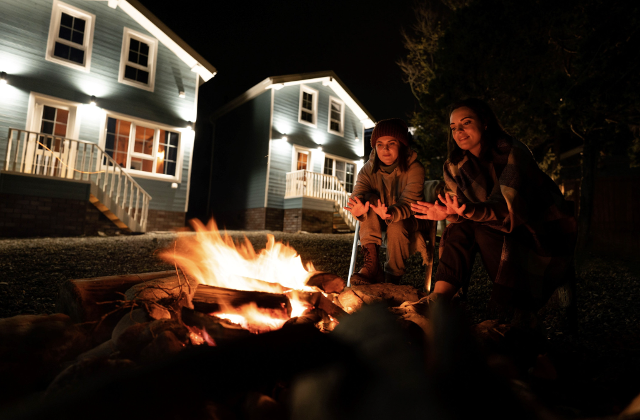
Across northern Europe, midsummer celebrations often centered on bonfires. Fire was bright, dramatic, and visible from far away. It symbolized energy, protection, and the strength of the Sun. People danced, sang, feasted, and sometimes leaped over flames or led animals past them. These acts were believed to bring health or ward off harm.
Versions of these customs survived into later folk traditions. In parts of Scandinavia and the Baltic region, midsummer remains a major celebration. Maypoles, flower crowns, singing, and outdoor meals all carry echoes of older seasonal rites, even if most people now see them as cultural tradition rather than sacred duty.
Water mattered too. Wells, rivers, and dew were often thought to have special power at midsummer. In some traditions, washing in morning dew was believed to bring beauty or good health. That may sound strange now, but it reflects a common ancient idea: certain moments in the year made ordinary things feel charged with meaning.
These customs also shaped language. The word “midsummer” still appears in place names, festivals, and literature. Shakespeare’s A Midsummer Night’s Dream helped fix the idea of midsummer as a time of altered rules, romance, and mischief. That playful mood did not come out of nowhere. It grew from older beliefs that this point in the year was powerful and slightly unpredictable.
Sacred calendars and royal power
In some cultures, marking the solstice was not just a community event. It was tied to political authority.
In ancient Egypt, rulers presented themselves as guardians of order. A temple aligned to the Sun supported that message. If the heavens moved as expected and the temple reflected that order, the ruler’s role looked legitimate and necessary.
The Maya also developed highly sophisticated calendar systems and tracked celestial cycles with great care. Their architecture often reflected astronomical knowledge. At sites across Mesoamerica, stairways, windows, and temple platforms could be used to observe key solar positions. These observations helped structure ritual life and reinforced the role of priests and rulers as interpreters of sacred time.
Ancient China offers another example. Court astronomers observed the sky because celestial order was connected to earthly rule. A ruler was expected to govern in harmony with heaven. Marking key points in the solar year, including the solstices, was part of that larger responsibility.
This connection between sky-watching and political power may seem distant from modern life, but the basic idea still feels familiar. Public calendars, national holidays, and official ceremonies still help societies agree on shared time. Ancient solstice rites were part of that same need for coordination, just expressed through the sky.
What people often misunderstand
A common mistake is to imagine ancient solstice traditions as strange or mystical in a vague way. In reality, they were often practical, social, and local.
Yes, these events could be religious. But they also helped communities gather, exchange goods, arrange marriages, settle disputes, and reinforce identity. A festival was useful. It brought people together when travel conditions were good and food supplies were more secure.
Another misunderstanding is that ancient people lacked scientific thinking. Their explanations of the cosmos were different from ours, but many were careful observers. They tracked shadows, horizon points, and repeating patterns over generations. Building a monument that aligns with sunrise on one specific day takes patience, skill, and repeated testing.
It is also easy to assume every ancient site with a possible alignment was definitely a solstice marker. That is not always true. Archaeologists have to be cautious. Some alignments are clear. Others are uncertain or may be accidental. The strongest cases combine architecture, local tradition, written records, and repeated patterns across a culture.
How these old markers still shape modern life
You do not need to visit a famous ruin to notice the legacy of these traditions.
Public festivals, folk dances, bonfires, flower garlands, and outdoor feasts often preserve older ways of marking important points in the year. Even when the original meaning fades, the pattern remains: gather people, notice the light, celebrate abundance, and mark change.
You can also see the ancient mindset in modern habits. Gardeners still pay close attention to daylight. Farmers still use seasonal markers. Many people feel an urge to spend more time outdoors when days are longest, even if they are not thinking about astronomy. The human link between light, work, food, and community has not disappeared.
If you want to recognize these older ideas in your own experience, look for small clues. Does a local festival involve fire, flowers, dancing, or staying out late? Is there a church, monument, or old building said to line up with the Sun on a certain day? Does a family tradition focus on gathering outdoors around a fixed date? Those customs often sit on very old foundations.
Ancient cultures marked the longest day in ways that were both practical and symbolic. They used stone, fire, ritual, and careful observation to make sense of the world around them. What survives is more than a set of old customs. It is a reminder that people have long looked to the sky not only for wonder, but for structure, meaning, and a shared rhythm of life.