BUZZ MAGAZINE – Today, many complain about roadside billboards, calling them boring and an eyesore. In past eras, highway advertising was much more interesting.
Get The Latest News!
Don't miss our top stories and need-to-know news everyday in your inbox.
This year marks the centennial of Route 66, and it’s also the 100th anniversary of the introduction of the Burma Shave signs, a series of five or six simple signs that entertained motorists with rhyming poems.
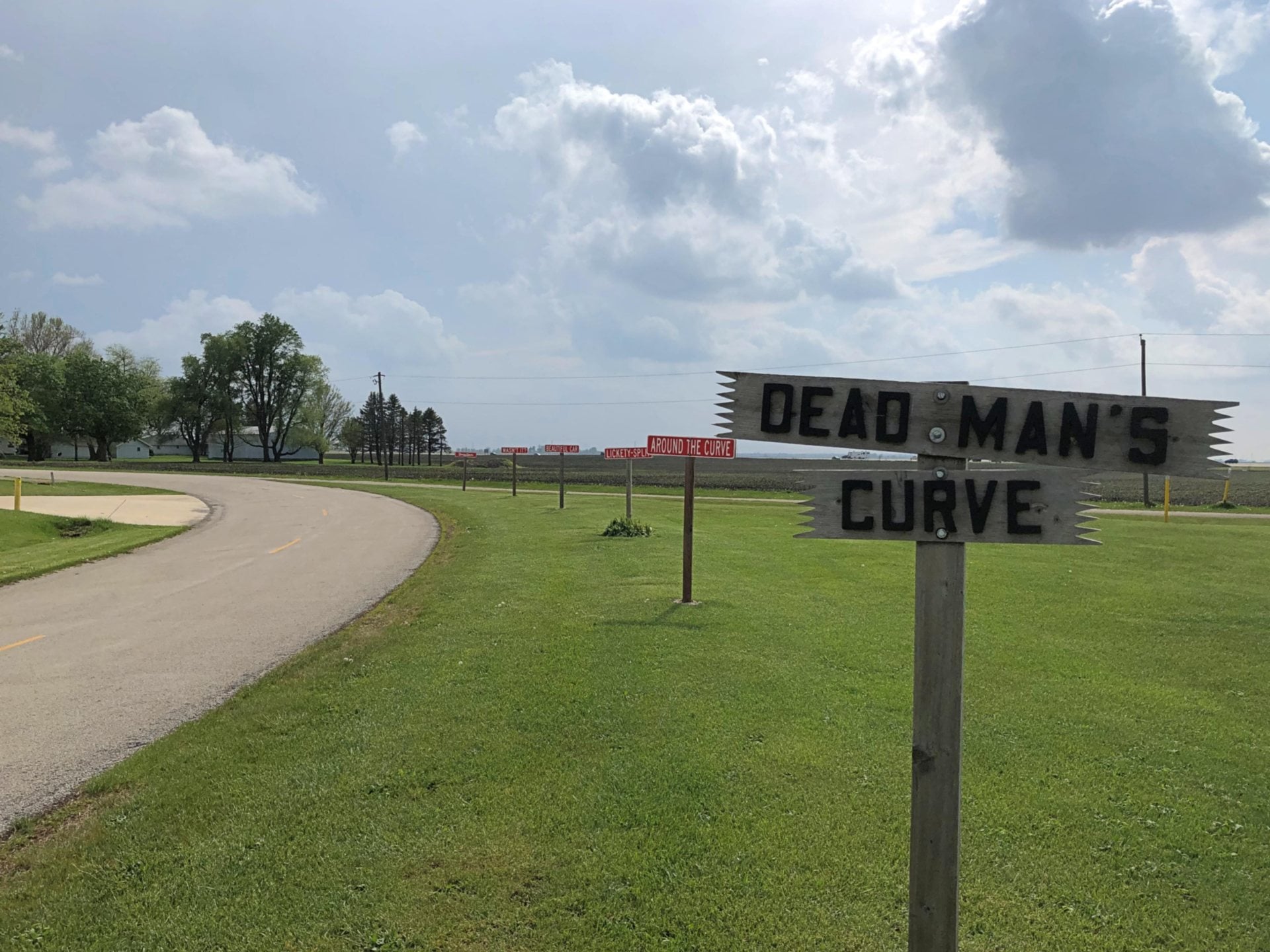
Today, replica Burma-Shave signs are found along Route 66 in Illinois near Towanda, north of Bloomington Normal, as well as in the Route 66 Experience Neon Sign Park at the Illinois State Fairgrounds.
The Burma-Shave signs, which were a staple on American highways from 1926-63, were a marketing bonanza for the company, and became part of the allure of car travel in the era.
The sequential signs hawked Burma-Shave, a line of shaving products created in 1925 by the Burma-Vita Company of Minneapolis. The introductory product of the company was a liniment made of ingredients “from the Malay Peninsula and Burma” - giving rise to its catchy name. That led to Burma-Shave brushless shaving cream which, at its height, was the second-best selling brushless shave cream in the United States.
Part of the company’s success – and consumer familiarity – were the signs, which measured 18 inches by 40 inches, and were normally spaced 100 feet apart.
The signs, which were usually red-and-white, were often placed in rented fields adjacent to the roadway, and were bolted in place. The last sign in each series usually had the words “Burma Shave,” which evolved into the last line of the rhyme.
The concept was the brainchild of Allen Odell, whose father, Clinton, had founded the company. A Smithsonian Institution source writes that Allen was inspired by sequential signs that led to a gas station in Illinois, each hawking a product offered at the station. Each of those signs in sequence said “Gas,” “Oil,” and “Restrooms,” with a fourth sign pointing to the station itself.
Allen mentioned the idea to family and friends, none of whom shared his excitement. His father was also lukewarm, but Allen was finally given $200 to test the idea.
Though dates vary, many state that the first Burma-Shave signs were placed on U.S. Route 65 near Lakeville, Minn. in September 1926. Not long after, the company began receiving increased orders from pharmacies near the signs, wanting more of the product.
Additional signs were placed as a result, and eventually, 7,000 Burma-Shave signs were found in all of the continental 48 United States except Massachusetts, Nevada, New Mexico, and Arizona. Ironically, the latter two states are among the eight on the alignment of Route 66 from Chicago to Los Angeles.
Over 600 verses were posted throughout the run of the Burma-Shave signs, including some of these favorites:
Does your husband / Misbehave / Grunt and grumble / Rant and rave / Shoot the brute some / Burma-Shave.
A shave / That’s real / No cuts to heal / A soothing / Velvet after-feel / Burma-Shave
These signs / We gladly / Dedicate / To men who’ve had / No date of late / Burma-Shave
Starting in 1935, Burma-Shave signs often had wry messages of driver safety, such as:
Keep well / To the right / Of the oncoming car / Get your close shaves / From the half-pound jar / Burma-Shave
Hardly a driver / Is now alive / Who passed / On hills / At 75 / Burma-Shave
It’s best for / One who hits / The bottle / To let another / Use the throttle / Burma-Shave
Past / Schoolhouses / Take it slow / Let the little / Shavers grow / Burma-Shave
In time, Burma-Shave held contests to let consumers suggest rhymes for new signs, with a $100 prize for verses that were selected.
By 1947, the company was selling over $6 million in products, but sales were flat for the next seven years before declining. Some also believe the signs were less effective with increased highway speeds and the interstate highway system, which made it difficult to read the signs in passing.
In 1963, Burma-Shave ended up under the control of Philip Morris, whose attorneys apparently decided that reading roadside signs while driving was a safety hazard. No new signs were created after that, and they disappeared entirely by 1966.
Philip Morris sold Burma-Shave to the American Safety Razor Company in 1968 and the brand disappeared until 1997, when a line of shaving cream and brushes under the Burma-Shave name was reintroduced.
Though the shaving brush of Burma-Shave was intended as a nostalgic throwback, it was actually a historical error, as the company had been best known for brushless shaving cream. The product has since disappeared from the market.
In addition to the replica signs along Route 66 in Illinois, recreated Burma-Shave signs are also found along the highway in a rest area along Interstate 44 in Missouri (which replaced Route 66 in that state) as well as on Arizona State Highway 66, part of the original alignment, from Ash Fork to Kingman in that state. Officials for that state freely admit it was not home to the original signs.
Off Route 66, recreated Burma-Shave signs are also found near Sublette in Lee County, Ill. as well as on various highways and transportation museums nationwide. Other entities have also imitated Burma-Shave signs with their own messaging, including Illinois State University, the University of Illinois, and social-issue organizations like GunsSaveLife.com.
Tom Emery is a freelance writer and historical researcher from Carlinville. He may be reached at ilcivilwar@yahoo.com or 217-710-8392.
This story originally ran in the June 2026 issue of The Prairie Land Buzz Magazine: http://www.thebuzzmonthly.com