
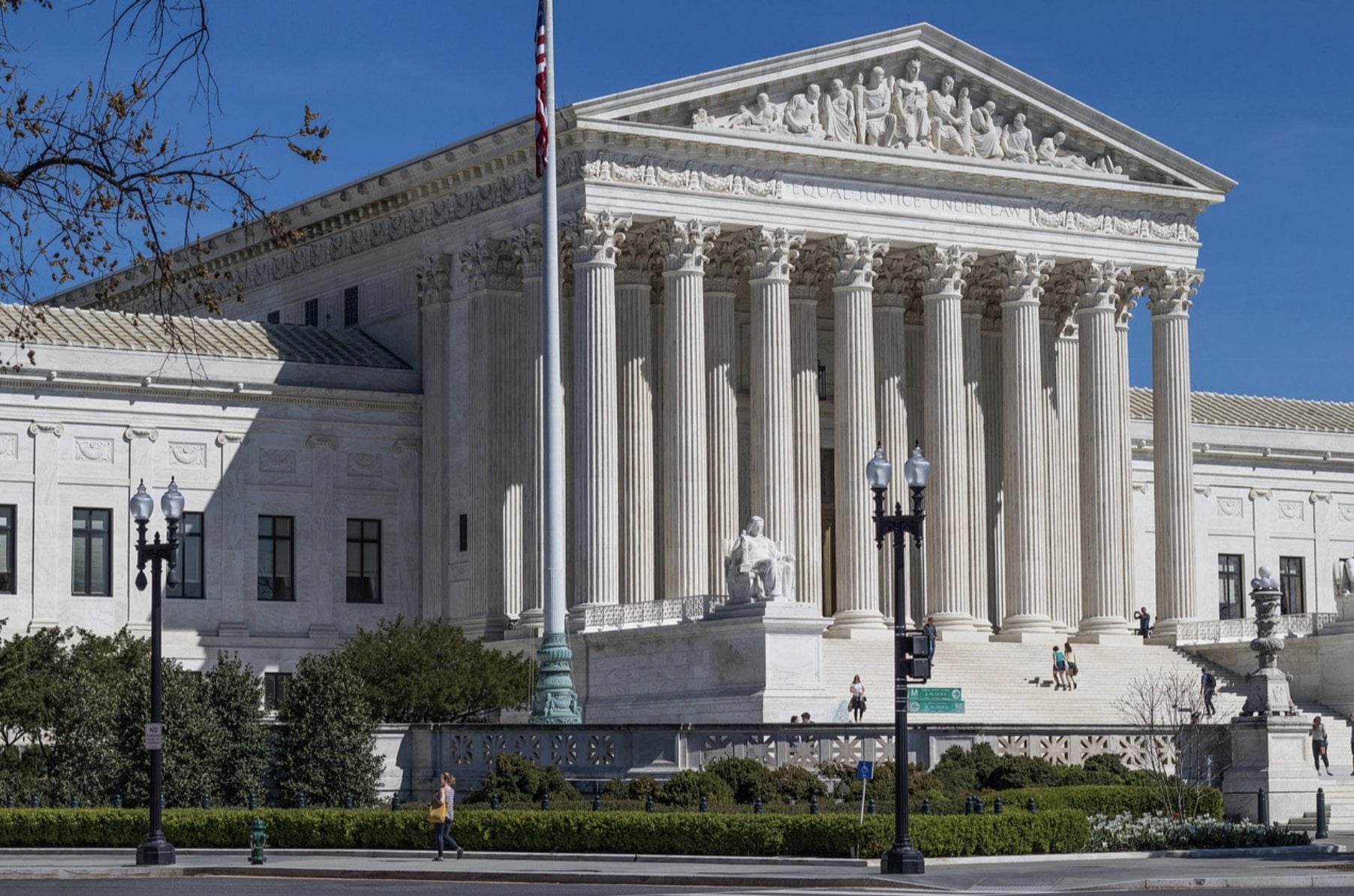
On May 17, 1954, the United States Supreme Court issued its decision in Brown v. Board of Education, ruling that racial segregation in public schools was unconstitutional. At the time, the decision challenged a long-standing legal system that treated separate schools for different races as acceptable, even when those schools were unequal in funding, facilities, and opportunity. It mattered immediately because it gave legal force to the idea that equal citizenship required equal access to education. It still matters today because it helped set a new standard for civil rights law, influenced court decisions far beyond schooling, and became a reference point—both practical and symbolic—for how societies debate fairness, equal protection, and the responsibilities of public institutions.
Get The Latest News!
Don't miss our top stories and need-to-know news everyday in your inbox.
Decades before Brown, May 17 had already seen turning points that shaped politics and power in Europe. In 1536, England’s Queen Anne Boleyn was tried on charges including treason and adultery, a process tied closely to King Henry VIII’s break with the Catholic Church and his push for a male heir. Her trial and execution soon after were not only personal tragedy but also part of a larger shift in English governance and religion. The Tudor monarchy used law, religion, and court politics to consolidate authority, and the consequences reached far beyond the palace: England’s religious identity, alliances, and internal conflicts changed for generations.
The date also connects to the early modern struggle for control of information and belief. In 1630, the Italian religious thinker and poet Giordano Bruno was formally condemned by the Roman Inquisition (a process that culminated in his execution in 1600, though the broader story is often remembered as a warning about the dangers of suppressing ideas). While Bruno’s life and death sit at the intersection of philosophy, theology, and science, the larger significance is simpler: European societies were wrestling with how much freedom scholars and writers could have when their ideas challenged accepted religious or political authority. That tension—between open inquiry and institutional control—has reappeared in many forms across the centuries.
By the late 1700s, May 17 was tied to the rise of modern political upheaval. In 1792, the New York Stock Exchange was founded when a group of brokers signed what became known as the Buttonwood Agreement. This step helped organize securities trading in the United States, setting rules and expectations for how investments would be bought and sold. Although it began as a local agreement, it became part of the infrastructure of global finance. Over time, stock markets would influence everything from industrial expansion to household savings, and they would also play a role in economic crises—showing how systems designed to manage risk can sometimes amplify it.
In 1814, Norway took a major step toward self-rule by adopting its constitution at Eidsvoll. The document was written during a turbulent period in Europe shaped by the Napoleonic Wars, when borders and monarchies were being rearranged. Norway’s constitution mattered because it expressed national sovereignty and created a framework for representative government. Even though Norway soon entered a union with Sweden, the constitution remained a key symbol and legal foundation, and May 17 became Norway’s national day—celebrated not as a military victory, but as a civic milestone centered on law and identity.
A different kind of transformation took place in the early 1900s, as new technology reshaped daily life and warfare. In 1902, Greek archaeologist Valerios Stais recognized that a corroded object recovered from a shipwreck near Antikythera was not just debris but part of a complex mechanism—what is now called the Antikythera mechanism. Later study showed it was an ancient Greek device used to model astronomical cycles, sometimes described as an early form of analog computing. Its importance lies in what it revealed: sophisticated engineering and scientific knowledge existed in the ancient world at a level many people did not expect, and modern understanding of technological history had to expand.
May 17 also marks events that shifted the course of the Second World War in the air. In 1943, the Royal Air Force carried out Operation Chastise, the “Dambusters” raid, using specially designed bouncing bombs to attack dams in Germany’s Ruhr region. The raid caused major flooding and damage to infrastructure, but it also led to significant civilian casualties, including forced laborers. Militarily, the long-term effect is debated, yet the operation became notable for its technical innovation and for what it showed about the growing role of engineering, precision planning, and air power in modern conflict. It also remains a reminder that even targeted military operations can have widespread human consequences.
Eleven years later, Brown v. Board of Education became a catalyst for broader change. The ruling did not instantly integrate schools across the country, and resistance was widespread. Still, it provided a legal foundation that civil rights advocates could use in courts and in public campaigns. Over time, it influenced other landmark decisions and helped push governments to confront how segregation and discrimination operated not only through personal prejudice, but through laws and public systems.
In 1969, May 17 entered the history of music and media when the rock group The Who released the album Tommy in the United Kingdom. Marketed as a “rock opera,” it told a continuous story across songs, showing that popular music albums could be structured like narrative works rather than just collections of singles. Its success encouraged other artists to experiment with longer-form storytelling and ambitious production, shaping how albums were made, marketed, and performed.
The date also holds a place in the history of LGBTQ+ rights. On May 17, 1990, the World Health Organization removed homosexuality from its International Classification of Diseases. This change did not end discrimination, but it mattered because medical classification influences law, policy, and public attitudes. By no longer labeling homosexuality as an illness, a major global health institution reduced a key source of stigma that had been used to justify coercive “treatments” and unequal treatment. In later years, May 17 became associated in many places with awareness efforts focused on combating homophobia, transphobia, and related discrimination.
In recent decades, May 17 has seen moments of political change and public accountability in different regions. In 2012, François Hollande was inaugurated as President of France after an election shaped by debates over economic policy and France’s role in Europe during the aftermath of the global financial crisis. The inauguration itself was routine, but it reflected democratic transitions that continue to influence how European states respond to economic pressure, migration, and security concerns.
Several notable people born on May 17 left lasting marks in very different fields. In 1749, Edward Jenner was born in England; he is remembered for pioneering the smallpox vaccine, work that eventually helped lead to the global eradication of smallpox in 1980. His methods were early and imperfect by modern standards, but the core idea—using vaccination to prevent deadly disease—became one of the most important public health tools in history. In 1904, Jean Gabin was born in France and became one of the defining actors of French cinema, known for performances that helped shape the style and international reputation of mid-20th-century French film. In 1955, the American musician and producer Bill Bruford was born; as a drummer for bands such as Yes and King Crimson, he influenced progressive rock and jazz-rock through a style that emphasized precision, unusual rhythms, and musical experimentation.
May 17 is also linked to the deaths of figures whose work continues to echo. In 1510, Sandro Botticelli died in Florence; his paintings, including The Birth of Venus and Primavera, became enduring symbols of Renaissance art and helped define how later generations imagined that era’s ideals of beauty, myth, and humanism. In 1985, Calvin Klein’s father, Leo Klein, died; while not a public figure on the same scale, his death is often noted in biographical accounts of the designer’s life and the broader story of how family background can shape creative careers. More widely recognized is the death of Donna Summer on May 17, 2012. Known as the “Queen of Disco,” she helped define a sound that spread through clubs, radio, and global pop culture in the 1970s and beyond. Her music influenced dance-pop, electronic production, and the way vocal performance could drive a beat-centered style.
Seen together, May 17 shows how history is built from many kinds of turning points.


