
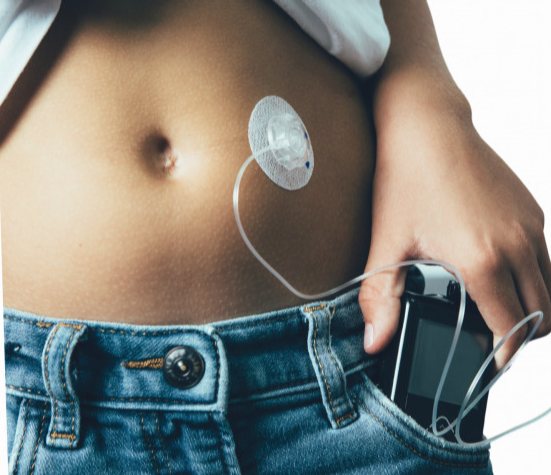
At-home technology for diabetes continues to evolve, giving people more peace of mind that the disease is in check while they enjoy their day. But how do you know you have the right device for your health and lifestyle? Jennifer Adcock, RN, BSN, CDCES, a certified diabetes care and education specialist at OSF HealthCare, has a roadmap. She says there are two main categories:
- Insulin pumps: These deliver insulin into your body to mimic the body’s natural production. This helps keep blood sugar at a healthy level. Adcock says it looks like a cell phone clipped to your midsection.
Get The Latest News!
Don't miss our top stories and need-to-know news everyday in your inbox.
“We have tubeless ones or ones with tubes. You would choose what works best for you,” Adcock says. “Some people are too active to be connected to that tube. So they would choose something like an Omnipod, which is a brand of tubeless insulin pump.”
How much insulin you need daily also plays a role in which device you choose, Adcock says, because some hold more insulin than others.
- Continuous glucose monitors (CGMs): It’s a patch on your arm with a filament under the skin. It reads your glucose every few minutes, and the results are transmitted via Bluetooth to a receiver or cellphone. This can let you know in real time if your blood sugar is too high or too low, and you can take quick action to avoid a serious health issue.
“It’s a big improvement,” from the old way of pricking yourself throughout the day, Adcock says. The con, though, is that the device can be expensive if your insurance doesn’t cover it.
- Insulin pump with tubeOmnipod wireless insulin pumpInsulin shotContinuous glucose monitorFinger prick
 Decisions, decisionsArticle continues after sponsor message
Deciding which diabetes device to use should start with a talk with your health care team and loved ones. Beyond that, lifestyle choices might come into play. Do you not want to carry insulin shots with you all the time? A pump might be the way to go. Or conversely, do you struggle with technology and don’t have someone at the ready to help? Maybe a CGM isn’t the choice for you, and you use the old finger-prick method.
“Make sure you’re not afraid to ask questions of your health care providers. That’s what we’re here for: to help,” Adcock says.
Daily maintenance
Regardless of what you choose, it’s important to keep the devices working properly. If, for example, your CGM stops working unbeknownst to you, your blood sugar could spike or drop, and you could wind up in the hospital. So talk to your health care provider about a backup plan if your primary device fails.
“Make sure you’re using your device correctly and as ordered by your physician,” Adcock implores. “These devices will give you messages like ‘It’s time to change your pump site’ or ‘It’s time to change your CGM site.’ Make sure you’re not ignoring and avoiding those.
“A really neat feature of CGMs is that since they use Bluetooth, you can have a support person also connected. They can review your numbers in real time but not be in the same area,” Adcock adds.
Copyright 2026 Riverbender.com. All rights reserved. This material may not be published, broadcast, rewritten, or redistributed.More like this: